

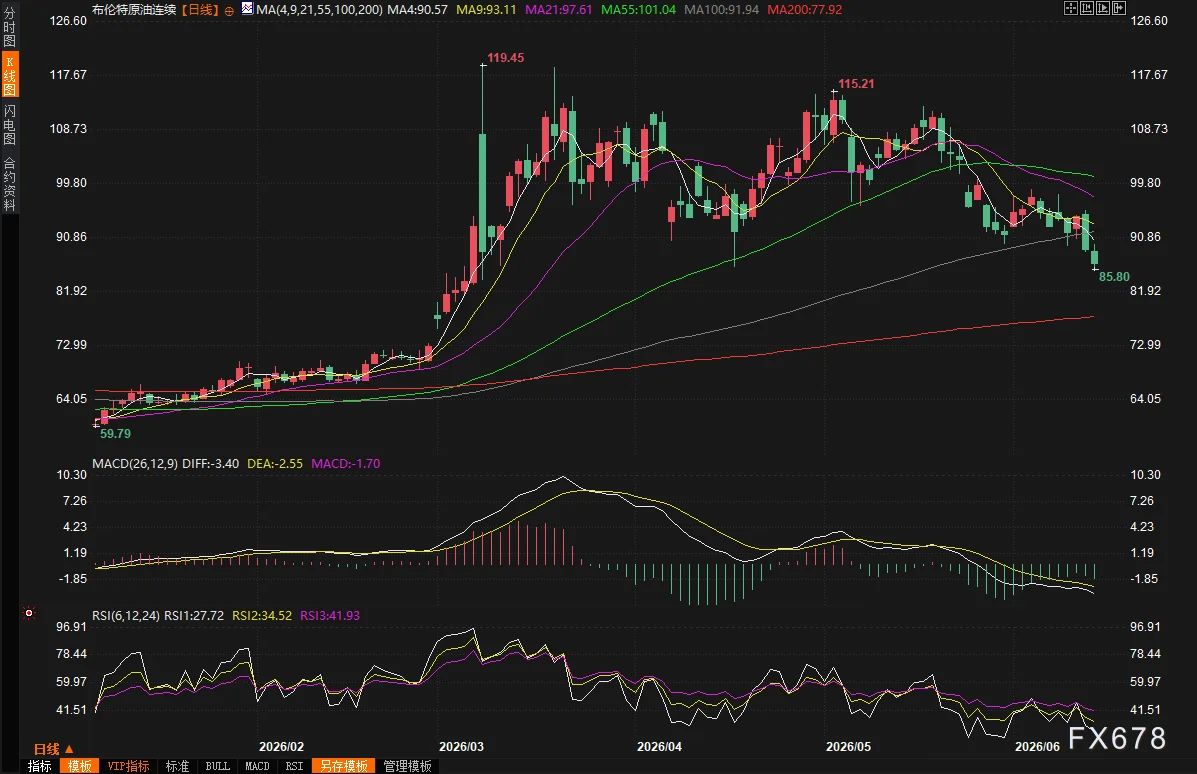
Brent crude oil prices experienced significant fluctuations this week as geopolitical tensions between the United States and Iran showed signs of easing, raising hopes for a peace agreement. Early in the week, oil prices surged sharply above $95 per barrel due to escalating conflict involving missile strikes between Iran and Israel, alongside threats of U.S. military action. However, as diplomatic efforts advanced and ceasefire signals emerged, prices retreated to their lowest levels since March, with Brent crude closing near $87.33 per barrel.
The volatile market reflected the uncertainty surrounding the prolonged conflict and its impact on oil supply. Initial hostilities caused a more than 5% jump in prices as investors feared disruptions to oil exports through the strategically vital Strait of Hormuz. Iran’s potential toll imposition on vessels further heightened supply concerns. Despite an OPEC+ agreement to raise production targets, actual output remained constrained by capacity limits and regional instability.
Midweek developments saw both sides signaling a pause in direct attacks under U.S. mediation, which helped push Brent crude below key technical support levels. Weak demand from major importers, especially a sharp decline in Chinese crude imports to an eight-year low, compounded downward pressure on prices. The U.S. Energy Information Administration forecasted a drop in global oil demand for 2026 compared to the previous year, suggesting that supply-demand fundamentals might continue to weigh on the market.
Renewed threats of military strikes briefly reversed the price decline midweek, supported by data showing significant draws in U.S. crude inventories and low fuel stockpiles in Asia. Nonetheless, optimism returned when President Trump canceled planned airstrikes on Iran after progress in negotiations became apparent. This decision, combined with reports of an imminent memorandum of understanding between the U.S. and Iran, led Brent crude to fall below $88 per barrel on Friday.
The prospective peace deal aims to reopen the Strait of Hormuz and lift port blockades, which would ease long-standing supply risks. However, analysts warn that even if the agreement is finalized soon, it will take months for oil flows to return to prewar levels due to shutdowns and infrastructure damage during the conflict. Consequently, oil prices are expected to remain elevated above $80 per barrel well into 2027 as countries rebuild depleted inventories.
Stock markets responded positively to the easing tensions, with major indices rallying alongside gains in energy stocks poised to benefit from sustained higher prices. Despite short-term price declines triggered by peace talks, companies like ConocoPhillips and Chevron are projected to generate substantial free cash flow given their breakeven costs well below current price levels.
Looking ahead, market participants remain cautious amid ongoing uncertainties about deal implementation, regional reactions, and nuclear negotiations. The oil market’s rapid swings this week underscore how geopolitical events can trigger sharp volatility but also highlight that fundamental supply-demand factors ultimately determine long-term price trends.