
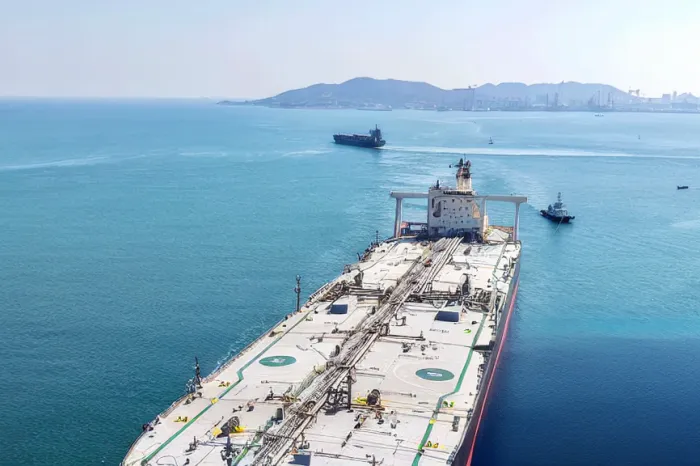
Brent crude oil prices fell significantly following the announcement of a landmark agreement between the United States and Iran aimed at ending hostilities and reopening the Strait of Hormuz. The deal, confirmed by both nations and mediated by Pakistan, has raised hopes for easing one of the largest disruptions to global oil supply in recent history.
Trading in Asia saw Brent crude drop by nearly 4% to below $84 a barrel as markets reacted to the news. The U.S. benchmark, West Texas Intermediate (WTI), also declined sharply, trading around $81 per barrel. This marks the lowest oil prices since the conflict began, reflecting renewed optimism about restoring oil flow through the critical shipping lane.
The Strait of Hormuz is a narrow but vital waterway located between Iran and Oman, through which about 20% of the world’s oil and liquefied natural gas typically passes. Since late February, when tensions escalated into open conflict, the strait was effectively closed, triggering a severe energy supply shock. This closure removed nearly 20 million barrels per day from the market, roughly one-fifth of global oil supplies, causing prices to spike to as high as $126 per barrel in mid-May.
President Donald Trump confirmed on social media that he authorized the immediate removal of the U.S. naval blockade on the strait and called for ships worldwide to resume operations. However, experts caution that reopening will not be instantaneous. Mines must be cleared from the waters, which could take weeks or even months, and there is a backlog of tankers waiting to transit. Additionally, some oil production facilities and refineries damaged or shut down during the conflict will require time to restart.
Iran’s Deputy Foreign Minister Kazem Gharibabadi confirmed that a memorandum of understanding had been finalized and that a formal signing ceremony is scheduled for June 19 in Switzerland. The agreement reportedly includes provisions for lifting certain sanctions on Iranian oil exports during a 60-day ceasefire period while broader nuclear negotiations continue. It also covers other regional issues such as Lebanon’s conflict.
Stock markets reacted positively to the news. Asian indices saw sharp gains with Japan’s Nikkei rising over 4% and South Korea’s Kospi jumping approximately 5%. European markets also climbed modestly. Shares of major oil companies like BP and Shell experienced declines as falling crude prices pressured their valuations.
Despite the positive momentum, analysts warn that oil prices may not fall much further in the short term due to ongoing uncertainties. The market still faces complexities including verifying Iran’s commitments and ensuring safe navigation through the strait. Moreover, global demand remains subdued following reductions in imports by major consumers like China and cutbacks in petrochemical refinery activities across Asia.
Overall, this US-Iran deal marks a significant diplomatic breakthrough with potential to alleviate one of the most serious energy crises in recent decades. While full normalization of oil flows will take time, reopening the Strait of Hormuz could gradually restore stability to global energy markets and ease price pressures that have impacted consumers worldwide.