
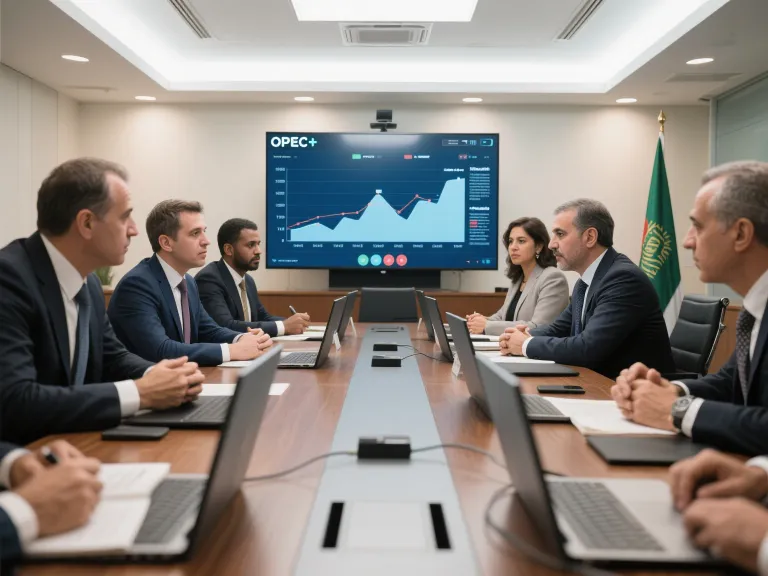
OPEC+, the coalition comprising the Organization of the Petroleum Exporting Countries, Russia, and other allied producers, is preparing to further increase oil output starting in October. According to statements from Iraqi officials and sources within OPEC+, the group is expected to agree on new production targets at its upcoming online meeting scheduled for Sunday. However, this anticipated rise in output will likely proceed at a slower pace compared to recent months, reflecting concerns over weakening global demand and evolving market conditions.
Background: Recent OPEC+ Strategy Shifts
Since April, OPEC+ has pivoted away from its previous strategy of cutting oil production. Instead, the alliance has implemented significant quota increases—raising output by approximately 2.5 million barrels per day (bpd). This increment accounts for roughly 2.4 percent of global oil demand and was enacted partly in response to external pressures, notably calls from U.S. President Donald Trump for reduced oil prices.
Despite these efforts, global oil prices have remained resilient, with benchmark crude trading near US$66 per barrel (HK$514.8). The persistence of elevated prices is largely attributed to Western sanctions imposed on major producers such as Russia and Iran. These geopolitical factors have supported price levels and encouraged rival producers—including the United States—to ramp up their own production.
Market Dynamics: Supply Increases Versus Price Trends
The recent increases in OPEC+ output have not led to a significant reduction in oil prices as initially intended. Instead, supply constraints stemming from sanctions and continued robust demand in certain regions have maintained upward pressure on prices. This market environment has prompted OPEC+ members to reevaluate their production strategies going forward.
Industry analysts note that while increased quotas were aimed at stabilizing or reducing prices by boosting market share, external factors outside of the group’s control have diminished the impact of these measures. As a result, OPEC+ faces complex decisions regarding future output levels as it seeks to balance member interests with broader market stability.
Upcoming Meeting: Key Decisions Ahead
The online meeting scheduled for Sunday at 1230 GMT will serve as a critical juncture for OPEC+ policy direction. The group is set to discuss a deal that would initiate further output increases beginning in October. Should consensus be reached, this would mark the start of unwinding a second tranche of production cuts totaling about 1.65 million bpd—more than a year ahead of the originally planned timeline.
This move follows the complete reversal of an initial round of cuts since April and signals OPEC+’s intention to adapt proactively to shifting market conditions. By accelerating the restoration of previously curtailed volumes, the alliance aims to respond both to internal pressures among member states and external developments affecting global supply chains.
Implications for Global Energy Markets
The potential decision by OPEC+ carries significant implications for energy markets worldwide. An increase in supply could exert downward pressure on prices if demand fails to keep pace; however, ongoing geopolitical tensions and sanctions may continue to support elevated price levels regardless of higher output.
Market participants are closely monitoring developments within OPEC+, recognizing that policy shifts by the group can influence not only short-term pricing but also longer-term investment strategies across the energy sector. Additionally, increased competition from non-OPEC producers—particularly those benefiting from current price trends—may further complicate efforts to stabilize markets.
Conclusion
As OPEC+ prepares for its pivotal meeting, industry observers await confirmation of new production targets and accompanying policy statements. The group’s actions will be instrumental in shaping global oil supply dynamics over the coming months amid persistent uncertainty surrounding demand growth and geopolitical risks.
Ultimately, OPEC+’s readiness to raise output—albeit at a moderated pace—reflects both its responsiveness to changing market realities and its ongoing role as a central actor in international energy affairs.
Related topics: