
In a surprising move, former U.S. President Donald Trump announced on Thursday a new trade agreement with Pakistan, focusing on the development of the country’s “massive” oil reserves. This announcement came shortly after Trump imposed a 25 percent reciprocal tariff on India, criticizing New Delhi for continuing to purchase Russian weapons and oil despite sanctions related to Russia’s war in Ukraine.
Trump, expressing frustration over India’s economic policies, also targeted the country’s agricultural and dairy sectors, which he claimed remained closed to U.S. exports. In a post on his social media platform Truth Social, he accused India and China of indirectly funding the conflict in Ukraine by buying Russian crude oil—a conflict Trump once claimed he could have resolved within 24 hours of assuming office.
Details and Implications of the U.S.-Pakistan Oil Deal
Pakistan confirmed the deal, stating it would lead to a reduction of reciprocal tariffs, particularly on exports to the United States, though specific tariff reductions were not disclosed. Earlier this year, Pakistan faced a 29 percent tariff under rates announced in April, which was temporarily suspended for 90 days to allow for renegotiations.
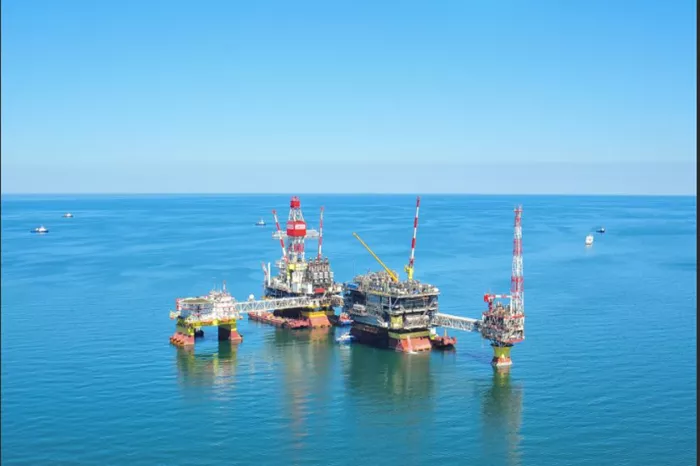
While details remain sparse, the deal likely involves U.S. companies obtaining drilling rights to develop Pakistan’s untapped oil reserves—a move that could bolster Pakistan’s energy sector and reduce its import dependence.
Impact on India: Limited but Symbolic
India, with proven oil reserves estimated at approximately 4.8 billion barrels as of 2016, significantly surpasses Pakistan’s reserves and oil production capacity. India’s daily crude production exceeds 600,000 barrels compared to Pakistan’s 68,000 barrels, though both nations rely heavily on imports to meet growing domestic demand.
According to the International Energy Agency, India’s oil imports are projected to increase substantially, underscoring the country’s vast energy needs. Pakistan’s smaller reserves and lower production suggest that the U.S.-Pakistan deal will have limited direct impact on India’s oil market.
However, the broader geopolitical undertones are clear. Trump’s strategy appears aimed at pressuring India to reduce its reliance on Russian oil and increase purchases from the U.S., using Pakistan as leverage in trade negotiations.
Geopolitical Dynamics and Future Outlook
Trump’s remarks hint at an attempt to realign regional energy and trade relationships, signaling dissatisfaction with India’s ongoing ties to Russia. His comment suggesting Pakistan might sell oil to India is widely viewed as unrealistic given the longstanding political and military tensions between the two neighbors and Pakistan’s comparatively limited reserves.
Pakistan’s oil reserves, estimated at around 353 million barrels in 2016, are modest relative to India’s. Recent discoveries in the Sindh province and offshore fields indicate potential but remain unproven, with production from new sites yielding low output levels.
Notably, Pakistan’s offshore blocks have attracted interest from Turkey, which in April signed a deal to explore 40 blocks within what is claimed to be the world’s fourth largest oil and gas reservoir. However, geopolitical instability and security concerns—highlighted by the death of Chinese engineers in a 2024 attack—have deterred major investments.
The U.S. involvement in developing Pakistan’s reserves marks a significant shift, potentially enhancing Islamabad’s energy capabilities amid economic challenges and signaling Washington’s strategic interest in the region.
Conclusion
While the U.S.-Pakistan oil deal is unlikely to alter the global oil landscape significantly, it underscores the complex interplay of trade, energy security, and geopolitics in South Asia. For India, the deal represents more of a political signal than an economic threat, emphasizing the pressure from Washington to align more closely with U.S. energy policies and reduce dependence on Russian supplies. For Pakistan, the partnership offers a vital boost to its energy sector and international standing, albeit amid ongoing uncertainties.
Related topics: