
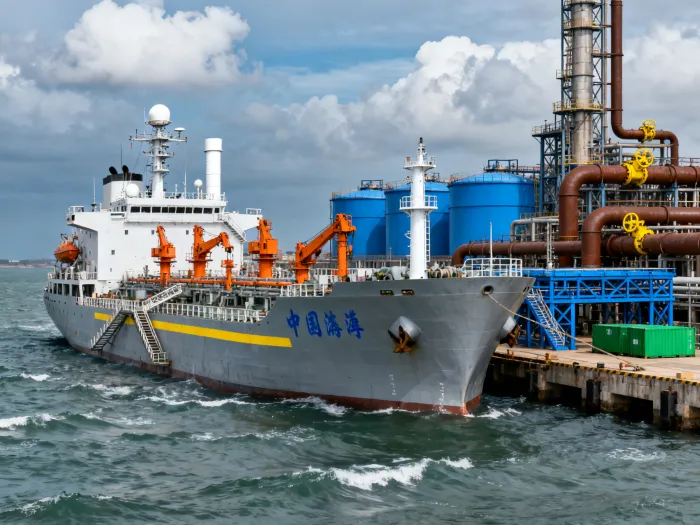
On Thursday, the administration of President Donald Trump announced a new wave of sanctions targeting Iran’s oil and petrochemical networks. The U.S. Treasury Department stated that about 100 individuals, entities, and vessels were sanctioned for their involvement in helping Iran export its oil and petrochemical products. Among those targeted is Shandong Jincheng Petrochemical Group, an independent refinery located in Shandong Province, China. According to Treasury officials, this refinery has purchased millions of barrels of Iranian oil since 2023, despite existing sanctions.
The sanctions also extend to Rizhao Shihua Crude Oil Terminal, which operates at Lanshan port in China. The U.S. Treasury claims that this terminal accepted shipments from more than a dozen vessels belonging to Iran’s so-called “shadow fleet.” These ships, including tankers named Kongm, Big Mag, and Voy, have transported millions of barrels of Iranian oil to Rizhao. The shadow fleet is known for its efforts to evade international sanctions by disguising the origin and destination of oil shipments.
U.S. officials say Iran’s oil revenues play a significant role in funding Tehran’s nuclear and missile programs, as well as supporting militant groups across the Middle East. While Iran maintains that its nuclear program is for peaceful purposes, Washington continues efforts to limit Tehran’s access to global energy markets. This latest round of sanctions marks the fourth time the Trump administration has targeted China-based refineries accused of purchasing Iranian oil.
Treasury Secretary Scott Bessent commented on the actions, stating, “The Treasury Department is degrading Iran’s cash flow by dismantling key elements of Iran’s energy export machine.” At a cabinet meeting following the announcement, President Trump revealed that Iran had expressed support for a recent ceasefire agreement between Israel and Hamas regarding Gaza hostages. He added that the United States would work with Tehran if it respects international obligations but reaffirmed that “they can’t have a nuclear weapon.”
Despite these measures, Iran continues to export significant volumes of oil. Data from United Against a Nuclear Iran—a group tracking Iranian petroleum shipments—shows that September exports reached a yearly high of approximately 63.2 million barrels, valued at $4.26 billion. Analysts suggest this increase may be linked to stockpiling ahead of anticipated United Nations sanctions resuming against Iran.
In addition to targeting refineries and vessels, the U.S. State Department designated Jiangyin Foreversun Chemical Logistics—a China-based terminal—as having received petrochemical products originating from Iran. This move marks the first time such a terminal has been included in U.S. sanctions against Chinese companies over ties to Iranian energy trade.
China has strongly criticized these unilateral measures. Liu Pengyu, spokesperson for the Chinese embassy in Washington, reiterated Beijing’s firm opposition to what it calls illegal and unilateral U.S. sanctions. Liu stated in an email response to Reuters: “The United States should stop interfering with, and undermining, the normal economic and trade cooperation between China and Iran.” He further stressed that China would “take all necessary measures to resolutely safeguard the legitimate rights and interests of Chinese companies.”
Iran’s mission to the United Nations in New York did not immediately respond to requests for comment regarding these new developments.
The imposition of these sanctions comes at a time when regional tensions remain high due to ongoing conflicts in the Middle East. The recent ceasefire agreement between Israel and Hamas represents a step toward reducing violence that has affected several countries including Iran, Yemen, and Lebanon. However, experts warn that continued restrictions on Iranian oil exports could have wider implications for global energy markets by reducing supply and potentially raising prices.
Furthermore, as international pressure mounts on both Chinese companies and Iranian energy networks, observers are closely watching how these measures will affect diplomatic relations among Washington, Beijing, and Tehran. While the U.S. insists its actions are aimed at curbing illicit financial flows supporting weapons programs and militant proxies, China and Iran maintain their commitment to lawful trade practices and peaceful development goals.
Related topics: