
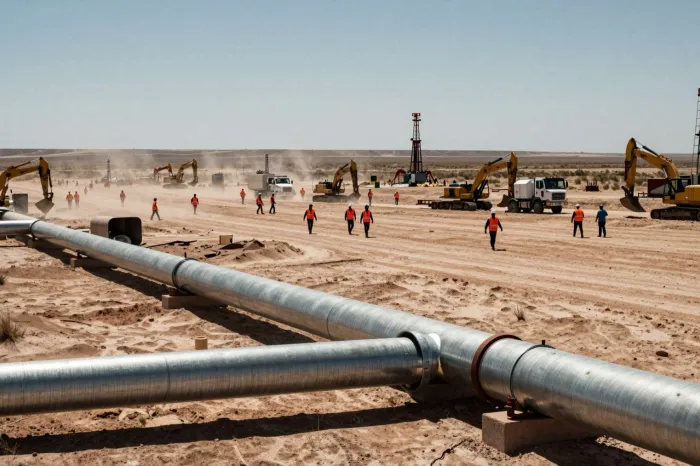
The United States is preparing for a substantial increase in natural gas pipeline capacity, with nearly 45 billion cubic feet per day (Bcf/d) of new infrastructure expected to be operational by 2027. According to the Energy Information Administration’s Natural Gas Pipeline Projects Tracker, about 70% of this capacity expansion is already under construction, reflecting strong industry confidence in meeting the set deadlines.
Texas Leads Pipeline Expansion Efforts
Texas is at the center of this surge, accounting for over two-thirds of the planned additions. The state will add more than 29.7 Bcf/d of new pipeline capacity, primarily aimed at improving takeaway options from the Permian Basin, the nation’s largest natural gas producing area. This growth addresses persistent congestion problems at key hubs such as the Waha Hub in West Texas, where supply has frequently outpaced pipeline capacity, causing market price distortions.
Broader Impact Across Sectors
Beyond boosting production transport from the Permian Basin, Texas’s expanded network will support a wide variety of customers. These include liquefied natural gas (LNG) export terminals along the Gulf Coast, as well as residential consumers, industries, and power plants throughout the state. The infrastructure upgrades align with increasing domestic demand for natural gas and underscore the rising role of LNG exports in global energy markets.
Louisiana and Virginia Follow with Significant Capacity Increases
Louisiana ranks second nationally in planned pipeline expansions, set to add roughly 8.4 Bcf/d by 2027. Projects such as the Port Arthur Pipeline Louisiana Connector and Pelican Pipeline will boost throughput capacity to support both domestic consumption and export activities. Virginia is also contributing to growth with an anticipated increase of 1.6 Bcf/d from projects like Williams’s Southeast Supply Enhancement Project, which extends delivery reach further south.
Meeting Growing Demand Through Infrastructure Growth
This ambitious pipeline development reflects broader trends driving natural gas demand across the U.S. Steady growth in LNG exports from Gulf Coast terminals combined with consistent domestic use for heating, electricity generation, and industrial purposes fuel the need for enhanced transportation infrastructure. Moving larger volumes from prolific production zones like the Permian Basin to market hubs remains critical to addressing evolving energy requirements.
With nearly three-quarters of new capacity already underway, industry experts expect these expansions to ease bottlenecks, stabilize prices at crucial points such as Waha Hub, and improve supply reliability for both export facilities and domestic consumers. This development represents a significant step forward in strengthening America’s natural gas delivery network amid shifting energy dynamics.