
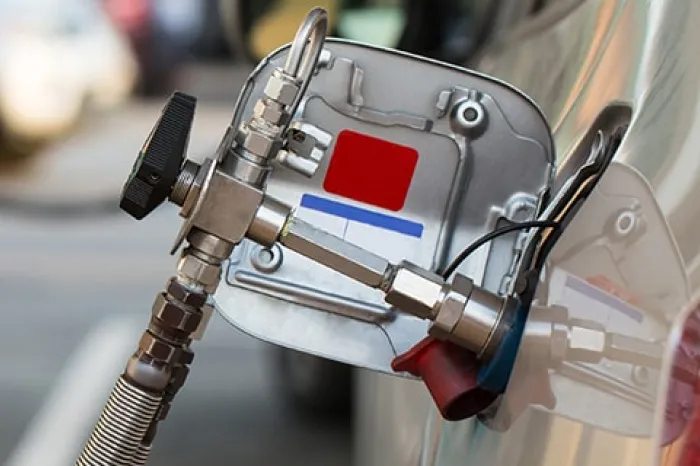
A recent TikTok video has drawn significant attention by showcasing a woman refueling her Honda Civic powered by compressed natural gas (CNG), shedding light on both the advantages and hurdles of natural gas vehicles. In the video, creator Summer visits a Clean Energy fueling station where she demonstrates the process of filling her vehicle’s tank, with assistance from a nearby police officer who helps capture the moment on camera. The clip quickly amassed over 1.5 million views within five days, igniting discussions around the practicality and future of CNG-powered cars.
Summer explains that her Honda Civic runs on compressed natural gas, a cleaner alternative to conventional gasoline. She carefully points out the distinctive cylindrical pump designed specifically for CNG vehicles and walks viewers through the fueling procedure, which involves simply lifting the handle to start fueling. However, she cautions that the process is accompanied by a notably loud noise. After topping off her tank, she reveals that she purchased fuel equivalent to approximately 3.5 gallons of gasoline for $19.06.
Despite her loyalty to the Honda brand, Summer voices frustrations about owning a CNG vehicle. Unlike traditional gasoline cars, she cannot just stop anywhere for fuel or take spontaneous long-distance trips beyond Southern California due to the sparse distribution of natural gas stations. She emphasizes how this inconvenience requires frequent refueling—sometimes multiple times per week—and expresses concern over potential station closures or mechanical issues disrupting her access to fuel.
Compressed natural gas vehicles operate on pressurized methane and depend heavily on specialized fueling infrastructure. According to data from the U.S. Department of Energy, there were roughly 700 public CNG stations across the country as of 2023, primarily concentrated in certain states. Honda introduced its Civic GX model in 2007 as an environmentally friendly option but discontinued it because of higher production costs and limited refueling options. Although briefly revived in 2012, CNG-powered vehicles remain rare in mainstream markets.
Responses to Summer’s video have been mixed among viewers. Some praise the relatively low cost of natural gas compared to gasoline, while others echo her concerns about the limited availability and reliability of CNG stations. Summer advises potential buyers to be cautious, highlighting that having only a few fueling points nearby can become stressful if those stations experience downtime.
This viral demonstration offers valuable insight into natural gas as an alternative vehicle fuel source while underscoring current infrastructure challenges that restrict wider adoption. While compressed natural gas presents environmental advantages over gasoline, practical obstacles such as limited fueling networks and travel constraints continue to hinder everyday usability. Industry experts suggest that expanding CNG station networks and enhancing vehicle options will be crucial steps toward making natural gas vehicles more accessible and appealing to a broader audience in the future.
