
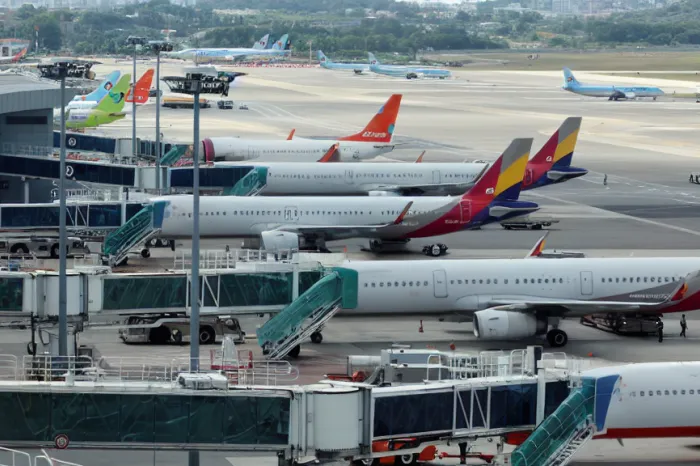
The recent surge in oil prices combined with currency fluctuations is creating significant challenges for the aviation industry and the broader fuel market worldwide. Airlines, particularly in South Korea, are facing heavy financial pressure as jet fuel costs have soared dramatically, while the weakening Korean won further strains their profitability. This dual impact threatens to slow down earnings recovery for major carriers amid ongoing global economic uncertainties.
South Korea’s five leading airlines are expected to report combined operating losses exceeding $540 million in the second quarter. Fuel expenses, which make up nearly 30 percent of total operating costs for airlines, have been hit hard by a sharp increase in jet fuel prices. The benchmark price of Singapore kerosene jumped from around $89 per barrel in February to more than $151 per barrel in May, representing a nearly 70 percent increase following escalating conflicts in the Middle East.
The depreciation of the Korean won against the U.S. dollar compounds these difficulties since airlines pay for fuel and aircraft leases in dollars. The exchange rate has remained above 1,500 won per dollar for several weeks, higher than levels seen earlier this year. As a result, airlines have raised fuel surcharges on tickets to offset rising costs. While these surcharges help reduce financial damage for carriers, they also drive up ticket prices and discourage price-sensitive travelers, especially on long-haul routes.
In response, many airlines are focusing on short-haul flights to nearby countries like Japan and China where demand remains stronger despite price increases. This strategic shift aims to stabilize revenue by relying less on volatile mid- to long-haul routes that are more sensitive to fare hikes. Despite these efforts, forecasts predict significant operating losses across major carriers including Asiana Airlines and Korean Air, as well as several low-cost carriers.
On the global oil supply front, U.S. Energy Secretary Chris Wright revealed that American military efforts are facilitating the movement of about 7 million barrels per day of oil out of the Persian Gulf. This intervention helps alleviate some supply disruptions caused by conflicts affecting tanker traffic through the Strait of Hormuz, a critical chokepoint that normally handles around 20 million barrels daily. While this is only about one-third of typical volumes, it is substantially better than some market estimates that anticipated even greater supply shortages.
Oil prices remain volatile amid these geopolitical tensions and supply uncertainties. Industry executives have warned that gasoline prices may continue to rise as fuel inventories fall to critically low levels. This situation complicates efforts by governments such as the U.S. administration to control inflation and ease financial pressure on consumers.
Overall, fluctuating oil prices combined with currency instability are reshaping market dynamics across aviation and fuel sectors globally. Airlines must adapt quickly to mitigate losses while consumers face higher costs at the pump and in air travel. Meanwhile, ongoing diplomatic and military actions aim to stabilize oil flows critical for global energy security.