
Texas, the leading oil and gas producer in the United States, is experiencing only a modest boost in oil production despite a significant surge in oil prices caused by geopolitical tensions in the Middle East. The closure of the Strait of Hormuz, a vital shipping route for nearly 20 percent of the world’s crude oil, has pushed West Texas Intermediate (WTI) crude prices from $63 per barrel early in February 2026 to an average near $100 in late May. However, this price spike has not translated into a major increase in drilling activity or employment within the Texas energy sector.
Historically, higher oil prices have driven increased exploration and production efforts, leading to more jobs and economic growth in Texas. The state produces about 5.8 million barrels of oil per day, accounting for 43 percent of U.S. production, and hosts nearly 30 percent of the country’s refining capacity. Despite this, current market uncertainty regarding how long elevated prices will last has led many producers to exercise financial caution. Large energy companies are focusing on maximizing profits and dividends from existing operations rather than rapidly expanding output.
Data from Baker Hughes shows that as of early June 2026, the total number of active drilling rigs in the U.S. rose slightly to 563, with oil rigs increasing by two to 431. However, this figure remains below last year’s levels. Crude oil production averaged approximately 13.7 million barrels per day during the week ending May 29, reflecting a minor decline from the previous week but an overall increase compared to the prior year.
Several factors are limiting more aggressive growth in drilling and production. Pipeline capacity constraints for natural gas in key regions like the Permian Basin restrict producers’ ability to increase output. Additionally, shortages of essential equipment such as generators and other machinery slow expansion efforts. Technological advances have also made oil extraction more efficient, requiring fewer workers to maintain or even increase production levels compared to previous decades.
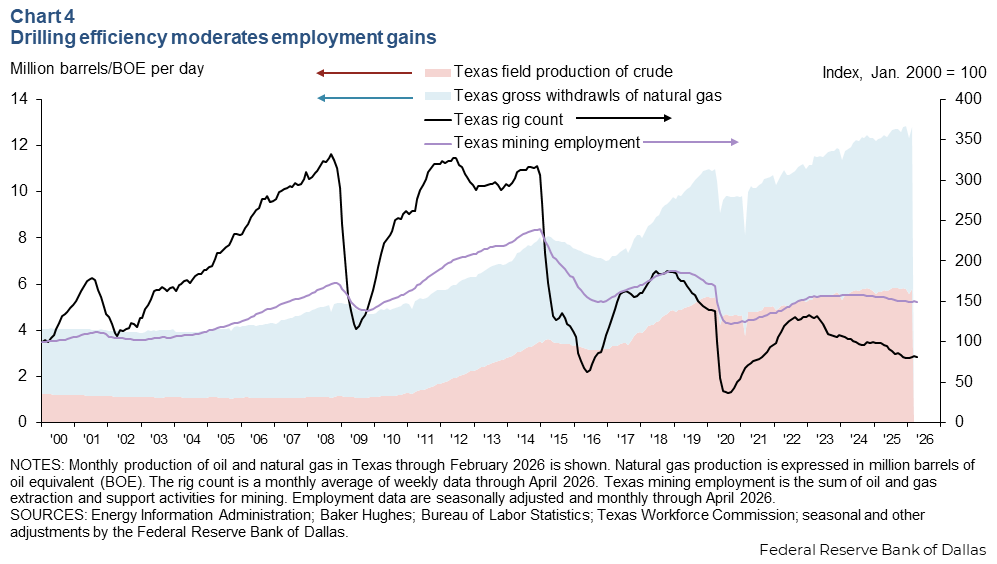
The economic impact of rising oil prices on Texas is complex. While higher revenues benefit energy companies and some landowners through royalties, consumers face rising gasoline costs—prices at the pump surged from $2.46 to nearly $4 per gallon within a few months. This increase puts pressure on household budgets across the state. Although job growth in the energy sector may be limited due to efficiency gains and cautious investment strategies, other economic benefits include increased tax revenues and higher bank lending activity tied to the energy industry.
Overall, Texas stands to gain from elevated oil prices primarily through improved profitability rather than substantial increases in production or employment. The ongoing conflict affecting global supply creates volatility and uncertainty that temper rapid expansion plans among producers. Market expectations suggest that while prices may remain above historical averages for some time, they are unlikely to sustain extreme highs long enough to trigger a significant drilling boom.
In summary, despite record-high oil prices driven by international disruptions, Texas’ oil industry is showing restraint in ramping up production. Financial discipline among producers and logistical constraints mean that gains for the state’s economy will be moderate rather than dramatic. Consumers face higher fuel costs even as energy companies enjoy increased earnings under current market conditions.