
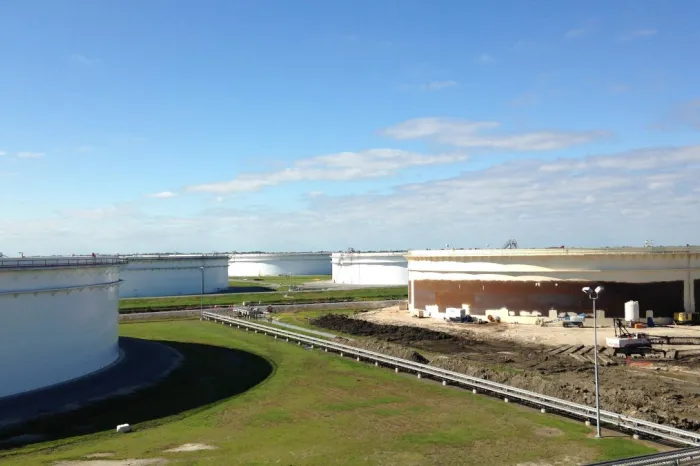
U.S. crude oil exports have surged to unprecedented levels, driven largely by significant releases from the Strategic Petroleum Reserve (SPR). This increase has contributed to a recent decline in global oil prices, particularly Brent crude, which fell to $93.73 per barrel after peaking above $106 earlier in the week. The market remains highly sensitive to geopolitical tensions surrounding the Strait of Hormuz, with fluctuations tied to developments in U.S.-Iran relations.
Recent data shows U.S. crude and petroleum exports reached nearly 12.9 million barrels per day (bpd), setting an all-time record. The rise is mainly due to the U.S. government’s commitment to release 172 million barrels on a loan basis from emergency reserves to ease global supply shortages caused by disruptions in Middle Eastern oil shipments. Approximately half of these released barrels have been exported directly, with European and Asian buyers acquiring nearly half of the stockpile crude.
The surge in exports has rapidly depleted both commercial and emergency oil inventories in the U.S. Total stocks in the SPR have fallen to about 365 million barrels, the lowest since mid-April 2024. Meanwhile, commercial crude inventories have dropped below the five-year average for four consecutive weeks, tightening domestic supply ahead of the summer driving season. Gasoline and distillate inventories are also at near six-month lows, raising concerns about potential supply constraints and price pressures within the U.S.
Analysts warn that while SPR releases and export surges have temporarily eased price spikes, these measures are finite and could lead to renewed upward pressure on prices once reserves dwindle further. There is growing speculation about possible U.S. export restrictions aimed at preserving domestic supply and controlling pump prices.
Brent crude prices remain particularly volatile due to their sensitivity to Middle Eastern shipping risks. Unlike West Texas Intermediate (WTI), which reflects more insulated domestic U.S. supply, Brent prices are influenced heavily by maritime transit through the Strait of Hormuz. Recent U.S. military strikes on Iranian targets have heightened concerns over shipping security, pushing insurance and freight costs higher and lifting Brent crude prices relative to WTI.
Looking ahead, commodity analysts predict that even if transit through the Strait of Hormuz normalizes fully, global oil markets will continue to experience vulnerability. The contrasting behavior of Brent and WTI benchmarks reflects ongoing geopolitical uncertainties and differing regional supply risks.
In parallel, natural gas markets are adjusting to disruptions in Middle Eastern LNG supplies, with U.S. production expected to play a key role in balancing global demand in 2026. Henry Hub gas prices have risen recently amid lower output and increased LNG exports from the U.S., with forecasts pointing toward further price increases driven by growing demand for power generation and heating.
Overall, the current trends in U.S. crude oil production and exports are reshaping global energy markets, influencing Brent crude oil pricing amid a complex mix of geopolitical tensions, strategic reserve management, and shifting supply-demand dynamics worldwide.