
The U.S. Energy Information Administration (EIA) has recently released several reports that shed light on critical developments in the petroleum and natural gas markets. These reports reveal significant trends, including a strong surge in natural gas demand driven by expanding LNG exports and increased domestic consumption fueled by artificial intelligence (AI) data centers. At the same time, global oil supply disruptions and tightening crude inventories are impacting prices and energy security.
According to the EIA’s latest projections, the United States is poised to more than double its liquefied natural gas (LNG) exports by 2050, rising from approximately 14.9 billion cubic feet per day (Bcf/d) in 2025 to over 30 Bcf/d. This growth is supported by new capacity coming online at major facilities such as Plaquemines LNG, Golden Pass, and expansions at Cheniere Energy’s Corpus Christi terminal. The increasing demand for cleaner energy sources globally, especially in Asia and Europe, is a key driver behind this expansion.
Domestically, AI data centers are rapidly increasing electricity needs, with natural gas expected to supply a significant share of this demand due to its reliability and fast deployment capabilities. Forecasts suggest that AI-related power consumption could add between 3 and 8 Bcf/d of natural gas demand by 2030. This surge, combined with LNG export ambitions, presents a dual challenge for U.S. natural gas production.
On the supply side, U.S. production remains robust with marketed natural gas reaching record levels near 120 Bcf/d in 2025. Key production areas include the Permian Basin, Appalachia, and Haynesville formations. However, concerns have been raised about the sustainability of reserves amid steep decline rates in shale wells and the pace of infrastructure development needed to support growth. The EIA projects dry gas production to continue increasing through 2050, though some analysts warn of potential export restrictions if supply fails to keep pace with demand.
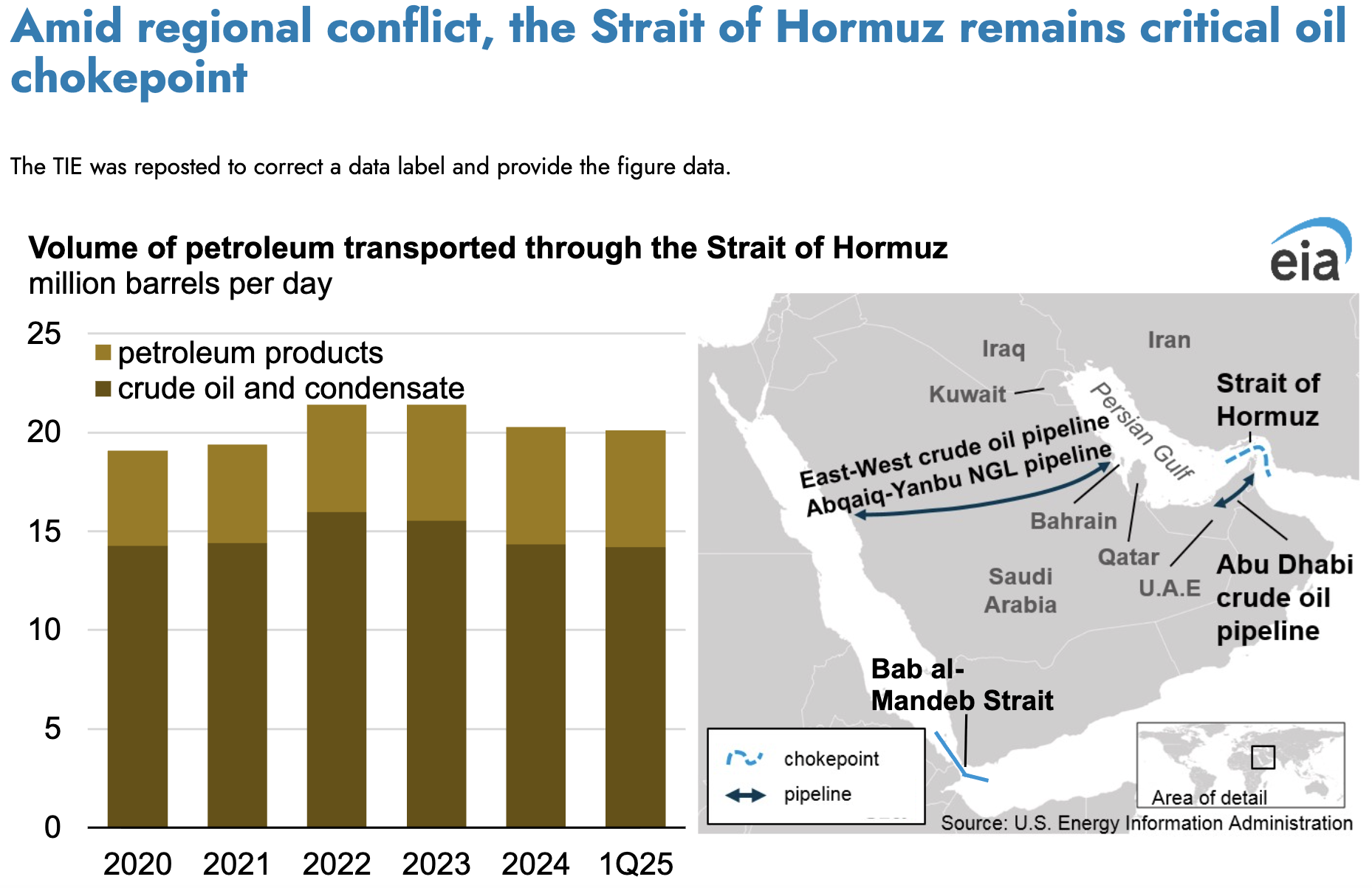
In the oil market, the EIA’s Global Energy Security Data report highlights significant disruptions in crude oil flows through the Strait of Hormuz due to conflict involving Iran. Oil shipments through this vital chokepoint fell nearly 30% year over year in the first quarter of 2026, dropping from 20.4 million barrels per day (Mb/d) to 14.6 Mb/d. This strait accounts for about one-fifth of global seaborne oil and LNG shipments, making its closure impactful on global energy prices.
To compensate for this disruption, oil flows through alternative routes such as the Panama Canal and Bab El-Mandeb Strait have increased. Additionally, pipeline capacities like Saudi Arabia’s East-West pipeline and the UAE’s Habshan-Fujairah pipeline are being utilized to bypass the strait, though their capacity limits restrict full replacement of lost volumes.
These supply constraints have contributed to a rise in Brent crude prices by more than 45% since the conflict began. In response, U.S. gasoline prices have increased nationwide but remain below peaks seen in previous crises like the 2022 Russia-Ukraine war. Regional variations in gasoline prices persist due to factors including refinery outages and local taxes.
U.S. commercial crude oil inventories have also declined sharply, with weekly EIA data showing a drop of nearly 8 million barrels during early May 2026. The Strategic Petroleum Reserve (SPR) has been drawn down as part of coordinated efforts to stabilize global markets amid these disruptions. Total petroleum stocks stand below five-year averages for this time of year, signaling tighter market conditions.
Overall, EIA data depict an energy landscape marked by strong demand growth for natural gas driven by both exports and domestic AI-related power needs alongside tightening oil supplies due to geopolitical tensions and inventory draws. These dynamics underscore the importance of continued investment in production capacity and infrastructure to ensure energy security and price stability in coming decades.