
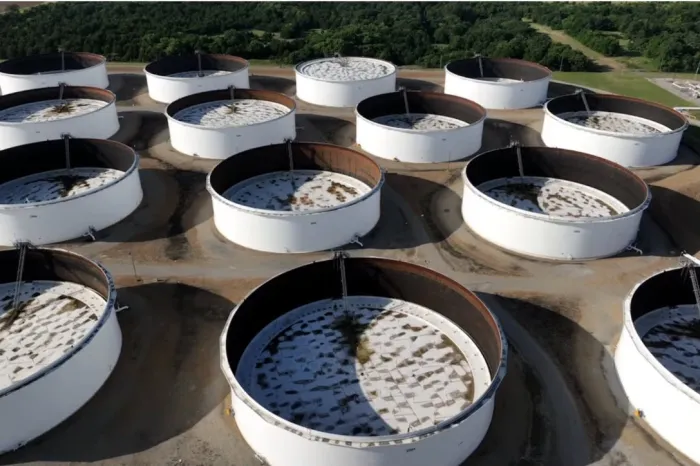
U.S. crude oil inventories have continued to decline, marking the seventh straight week of draws as reported by the U.S. Energy Information Administration (EIA) for the week ending June 5, 2026. Commercial crude stocks, excluding the Strategic Petroleum Reserve (SPR), dropped by 7.2 million barrels to 426.5 million barrels, which is about 5% below the five-year average for this period. This decrease surpassed analyst expectations and highlights ongoing supply tightening caused by strong refinery activity and increased exports against a backdrop of global supply disruptions.
The Strategic Petroleum Reserve has also seen a sharp decline, falling to approximately 349.2 million barrels from around 415 million barrels earlier this year. This level represents one of the lowest points in recent decades after years of gradual releases from the reserve. Historically, the SPR peaked above 700 million barrels during the late 2000s and early 2010s but has steadily decreased since then.
Refined petroleum products show mixed trends. Gasoline inventories slightly increased by 186,000 barrels to about 215.1 million barrels but remain roughly 6% below the five-year average. Meanwhile, distillate fuel oil stocks, which include diesel and heating oil, fell by 200,000 barrels to around 102.1 million barrels—about 13% below the typical range for this time of year. Jet fuel stocks reached a new high for the year at approximately 45.4 million barrels, supported by record U.S. production and exports. Despite these figures, total transportation fuel inventories are expected to approach multi-decade lows by the end of the year.
High refinery utilization rates—operating at over 95% capacity—reflect efforts to meet strong demand amid global shortfalls. However, oil prices have recently pulled back slightly, with West Texas Intermediate (WTI) crude futures trading in the mid-to-high $80 per barrel range after previously higher levels driven by geopolitical tensions. The market is now focused on an upcoming futures contract rollover scheduled around June 22–24, which could increase price volatility as traders shift positions.
Geopolitical tensions remain a key factor affecting supply and prices. The ongoing U.S.-Iran conflict, which escalated earlier this year following attacks and blockades near the Strait of Hormuz, has disrupted global oil flows significantly. In response, U.S. refineries have ramped up production and exports to fill supply gaps, directly contributing to domestic inventory draws. Industry experts warn that unresolved conflict could push crude prices much higher, potentially reaching $140–$160 per barrel in worst-case scenarios.
On the supply front, Iraq has emerged as a significant player in U.S. crude imports according to EIA data released on June 14, 2026. Iraq climbed to sixth place among the largest oil suppliers to the United States last week with an average export volume of 107,000 barrels per day (bpd). This marks a substantial increase from just 43,000 bpd in the previous week. Canada remains the largest supplier with nearly four million bpd, followed by Venezuela, Colombia, Mexico, and Saudi Arabia.
Notably absent from U.S. imports during this period were Nigerian and Libyan oil shipments, which recorded zero exports amid volatile maritime routing changes affecting African OPEC producers. These shifts underscore how geopolitical factors continue to influence global oil trade flows.
For consumers in the U.S., retail gasoline prices have slightly eased but remain elevated with national averages near $4.09–$4.15 per gallon for regular gasoline and about $5.21 per gallon for diesel fuel as of mid-June 2026. While recent price dips offer some relief, persistent low distillate inventories combined with high demand during summer months and ongoing geopolitical risks suggest upward pressure on fuel prices may persist.
Investors face a complex environment where energy producers may benefit from tight supplies and potential price spikes but must navigate volatility linked to futures contract rollovers and geopolitical developments. Refiners operate under mixed conditions with strong utilization supporting margins but facing challenges from fluctuating crude costs.
Looking ahead, market participants are advised to monitor forthcoming EIA reports and developments in Middle East negotiations closely as these will be critical in shaping near-term oil market dynamics and price trends.