
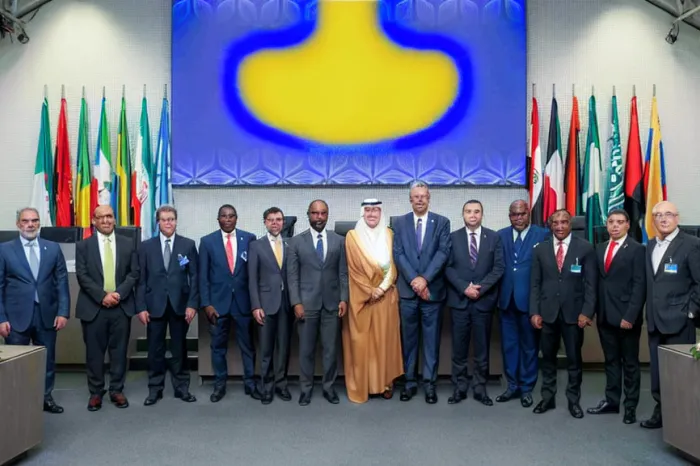
On April 28, the United Arab Emirates (UAE), responsible for about 4% of global oil production, officially left the Organisation of the Petroleum Exporting Countries (OPEC). The UAE’s departure signals a significant shift in the oil market and challenges OPEC’s ability to control production and influence prices. OPEC, established over 60 years ago, is an intergovernmental organization that sets production limits among its members to maintain what it calls “fair and stable” oil prices. However, many economists view it as a cartel that restricts competition to keep prices high.
The UAE’s decision to exit stems largely from its desire to increase oil output, a move opposed by Saudi Arabia, OPEC’s dominant leader. Tensions within the group have been rising, especially following recent conflicts involving Iran, another OPEC member. Despite the UAE’s potential to raise oil exports and possibly reduce soaring oil prices, actual market changes have been muted. This is partly due to the ongoing closure of the Strait of Hormuz—a critical passage for more than half of UAE’s oil and all its gas exports—and unsettled peace talks between the United States and Iran.
OPEC was founded in 1960 by five countries: Venezuela, Iran, Iraq, Kuwait, and Saudi Arabia. It emerged as a response to the dominance of Western oil companies known as the “Seven Sisters,” which controlled much of the world’s oil supply and kept producer nations with limited revenue shares. Over time, OPEC expanded its membership and gained control over more than half of global oil production by the early 1970s.
The organization became globally influential during the 1973 oil crisis when Arab members used oil price hikes and an embargo to pressure Western nations over their support for Israel during the Yom Kippur War. Oil prices surged from about $3 to over $12 per barrel within months, triggering widespread economic disruption worldwide. This event reshaped global energy policies, encouraging alternative energy sources and conservation efforts in many countries.
However, OPEC’s influence has fluctuated since then. The rise of non-OPEC producers and internal disagreements have often weakened its power. In the 1980s, excess supply led Saudi Arabia to dramatically lower prices to regain market share. More recently, US shale oil production has further challenged OPEC’s dominance. To adapt, OPEC formed a broader alliance called OPEC+ in 2016 that includes Russia and other producers controlling around 40% of global output.
Despite these efforts, smaller members frequently express dissatisfaction with policies driven primarily by Saudi Arabia and Russia. Qatar left OPEC in 2019 over such concerns, followed by Angola and Ecuador. The UAE’s exit is more impactful given its status as the cartel’s third-largest producer. Analysts suggest this could mark “the beginning of the end” for OPEC’s role as a central regulator in global oil markets.
For now, geopolitical issues like the Iran crisis limit immediate effects on oil supply and prices. Yet without the UAE’s ability to swiftly increase production when needed, OPEC’s function as a “global central bank for oil” is significantly weakened. This development adds uncertainty to energy markets already navigating complex political tensions and shifting supply dynamics.