
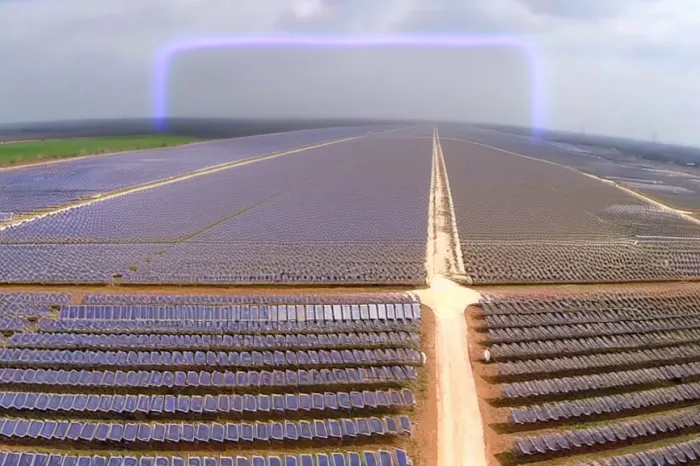
The U.S. Energy Information Administration (EIA) has released a new forecast indicating a major shift in Texas’s energy landscape. For the first time, solar power generated from utility-scale installations is expected to exceed coal power generation in the Electric Reliability Council of Texas (ERCOT) region in 2026. According to the EIA, solar generation will reach approximately 78 billion kilowatt-hours, while coal generation will fall to about 60 billion kilowatt-hours. ERCOT supplies electricity to nearly 90 percent of Texas, including major cities such as Houston.
This change reflects rapid growth in solar capacity as Texas meets increasing electricity demand with cleaner energy sources. While natural gas remains the largest source of power, providing around 44 percent of electricity between 2021 and 2025, solar’s share has grown from four percent to 12 percent during that period. In contrast, coal’s share has declined from 19 percent down to 13 percent.
The EIA also notes that Texas will contribute nearly 40 percent of new U.S. solar capacity additions in 2026, equating to about 14 billion kilowatt-hours. Solar power briefly surpassed coal on a monthly basis for the first time in March 2025, when solar generated 4.33 billion kilowatt-hours compared to coal’s 4.16 billion kilowatt-hours. Solar output continued to exceed coal through August of that year.
Looking ahead, the EIA forecasts solar generation will maintain its lead over coal for most months in 2026, except December when coal generation is expected to slightly surpass solar again. In 2027, solar is projected to generate 99 billion kilowatt-hours annually compared with coal’s 66 billion kilowatt-hours on the ERCOT grid.
The rising demand for electricity in Texas also plays a role in this transition. ERCOT projects electricity demand will approach nearly 368 billion kilowatt-hours by 2032. The region set a record peak demand of 85.5 billion kilowatt-hours in August 2023. ERCOT President and CEO Pablo Vegas highlighted that rapid growth and development are changing how electricity needs are planned and managed across the state.
This forecast underscores Texas’s growing role in expanding renewable energy and reducing reliance on coal-fired power plants. The state’s ample sunlight and supportive policies continue to drive substantial investments in solar infrastructure. As solar capacity expands, it is reshaping the energy mix and helping Texas move toward a cleaner and more sustainable electricity future.