
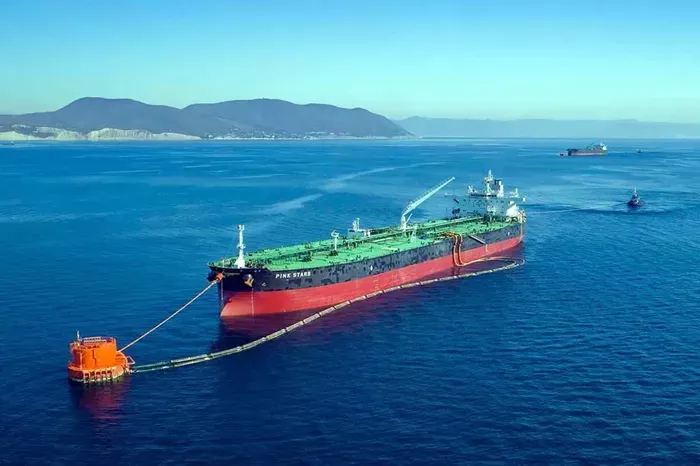
Kazakhstan’s oil exports through the Caspian Pipeline Consortium (CPC) terminal witnessed a substantial decrease in January 2026. Shipments of CPC Blend crude dropped to between 800,000 and 900,000 barrels per day, marking a sharp 45 percent decline compared to forecasts made in mid-December. According to The Caspian Post, which cites foreign media sources, traders canceled at least 21 of the 45 shipments that had been scheduled for this period. This wave of cancellations disrupted oil market flows and contributed to an increase in crude prices. Recently, a cargo of CPC Blend was sold at a premium of $1.20 per barrel over Dated Brent, significantly higher than the anticipated range of $0.60 to $0.80 per barrel.
The unexpected drop in exports has raised concerns among market participants and industry observers. The CPC pipeline is crucial for Kazakhstan, which produces about 1.8 million barrels of oil each day. Although there are alternative routes for exporting Kazakh oil, these channels can only handle roughly half the volume that the CPC pipeline manages under normal conditions. This limitation increases the importance of maintaining stable operations at the CPC terminal.
Multiple Operational Setbacks Impact Export Capacity
A series of operational challenges have contributed to the current situation at the CPC terminal. Drone attacks recently disabled one of the offshore loading units, while another is undergoing scheduled maintenance and repairs. Additionally, severe storms in the Black Sea have repeatedly halted loading activities, forcing the terminal to operate on an intermittent basis.
Industry sources report that storage tanks at the CPC facility are now full due to these disruptions. As a result, the pipeline system has been compelled to temporarily stop accepting oil from producers until space becomes available. Experts note that Kazakhstan requires at least two fully functional loading units at the terminal to maintain regular export volumes, with a third unit ideally kept in reserve for emergencies or maintenance needs.
These operational setbacks have heightened concerns about the long-term reliability of Kazakhstan’s oil export infrastructure. Prolonged disruptions could force producers to cut output if they are unable to ship their crude in a timely manner.
Market Reactions and Strategic Implications for Kazakhstan’s Oil Sector
The recent turmoil in Kazakhstan’s export logistics has led to noticeable shifts in global oil pricing and supply dynamics. With fewer shipments leaving the CPC terminal, traders have responded by pushing up premiums for CPC Blend cargoes. The current premium over Dated Brent reflects both the scarcity of available barrels and uncertainty regarding future supply flows from the region.
Kazakhstan’s government and industry leaders are now facing increased pressure to ensure reliable operations at key export facilities. The CPC pipeline remains a vital lifeline for the country’s energy sector, given its ability to handle large volumes efficiently. However, reliance on this single route exposes Kazakhstan’s oil producers to risks when unforeseen events disrupt normal operations.
While alternative export routes exist—such as rail transport or other pipelines—they lack the capacity required for Kazakhstan’s full production levels. This bottleneck underscores the strategic importance of maintaining multiple fully functional loading units at the CPC terminal and investing in resilience against external threats like drone attacks or severe weather events.
Uncertainty Looms as Stakeholders Seek Solutions
As of now, the Caspian Pipeline Consortium has not issued any official statements addressing these recent challenges or outlining steps being taken to resolve them. The absence of public commentary adds uncertainty for international buyers and domestic producers alike.
Market analysts warn that if disruptions persist at the CPC terminal, Kazakhstan may be forced into difficult decisions regarding production levels or alternative export strategies. Such outcomes could have ripple effects across regional energy markets and impact global supply chains.
In conclusion, Kazakhstan’s sharp decline in oil exports via the Caspian Pipeline Consortium terminal highlights ongoing vulnerabilities in its energy infrastructure. Resolving operational setbacks and building greater resilience will be essential for ensuring stable oil flows and protecting economic interests both domestically and internationally.