
The U.S. Energy Information Administration (EIA) has reported a significant rise in the value of renewable identification numbers (RINs), which are compliance credits used to meet biofuel blending requirements under the Renewable Fuel Standard (RFS). Since the beginning of 2026, the prices of RINs for biomass-based diesel and ethanol have roughly doubled, largely due to increased biofuel blending targets set by the Environmental Protection Agency (EPA).
RINs serve as market credits generated when biofuels such as ethanol and biodiesel are produced or imported. These credits allow petroleum refiners and fuel importers to comply with federally mandated renewable volume obligations (RVOs) by either blending biofuels into traditional fuels or purchasing RIN credits from others. On June 4, biomass-based diesel RINs traded at $2.41 per credit, while ethanol RINs stood at $2.37, both nearing their all-time highs recorded in 2021.
The increase in RIN prices is closely linked to the EPA’s announcement on March 27 of final RFS rules for 2026 and 2027, which established higher RVOs than those set for 2025. These heightened blending mandates raise the demand for biofuels, pushing up RIN prices as producers seek greater profit margins to justify increased production. Additionally, rising gasoline and diesel prices have made blending ethanol into motor fuels more attractive economically.
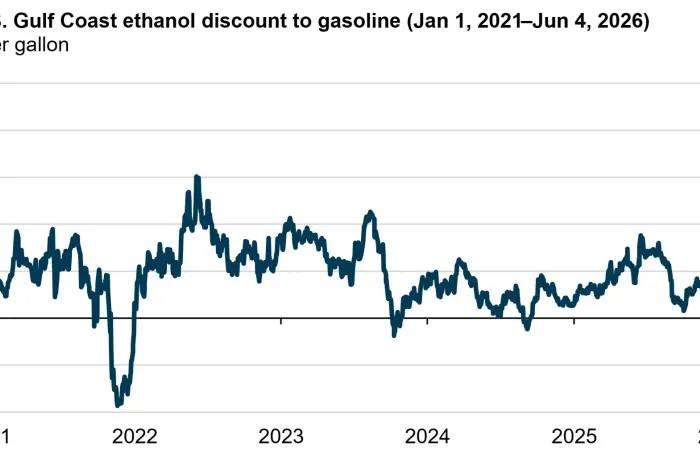
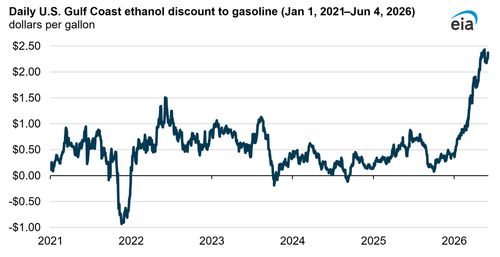
Adjusted for energy content, ethanol prices on the U.S. Gulf Coast have remained lower than gasoline prices since mid-March. When combined with the higher value of ethanol RIN credits, the effective discount for ethanol compared to gasoline exceeded $2 per gallon in May and June. This dynamic encourages more blending of ethanol into gasoline supplies. Similarly, high RIN prices have improved profit margins for biodiesel and renewable diesel producers. The relationship between soybean oil and heating oil prices, known as the Bean Oil-Heating Oil (BOHO) spread, typically influences these margins. However, in 2026, RIN values have increased faster than the BOHO spread, indicating stronger profitability for biofuel production.
The EIA forecasts record-high production levels for fuel ethanol and renewable diesel in 2026 driven by these factors: elevated blend mandates, higher petroleum fuel prices, and expanding production capacities at biofuel plants. Fuel ethanol output is expected to rise by 2%, reaching a share of 10.7% of motor gasoline consumption compared to 10.5% in 2025. Renewable diesel production is projected to grow by 24%, while biodiesel output is anticipated to increase by 41%, although it remains below previous peak levels due to some lost capacity.
Looking ahead to 2027, further increases in RVOs are expected to sustain growth in biofuel production across all three fuels. The combination of regulatory support and market conditions continues to create an advantageous environment for biofuel producers and blenders aiming to meet federal renewable fuel goals.