
WTI crude oil prices have experienced significant fluctuations recently as geopolitical tensions between the United States and Iran continue to influence the global energy market. Reports of progress in peace talks have led to sharp declines in oil prices, while military incidents and ongoing uncertainty maintain high volatility.
On Monday, WTI crude futures dropped nearly 7%, falling from $96 to around $90 per barrel. This sharp decrease followed news that the US and Iran, with Qatar’s mediation, were moving closer to a tentative agreement aimed at easing hostilities. The potential deal includes a temporary halt to conflict and a 60-day negotiation period for a final settlement, raising hopes that oil shipments through the critical Strait of Hormuz could resume more freely.
The Strait of Hormuz is a vital route for about one-fifth of the world’s oil supply, and any disruption there tends to push prices higher due to fears of supply shortages. Market analysts noted that the prospect of reopening the strait reduced geopolitical risk premiums, causing traders to lower oil prices. However, experts also cautioned that the situation remains fragile, with previous negotiations having collapsed before final agreements were reached.
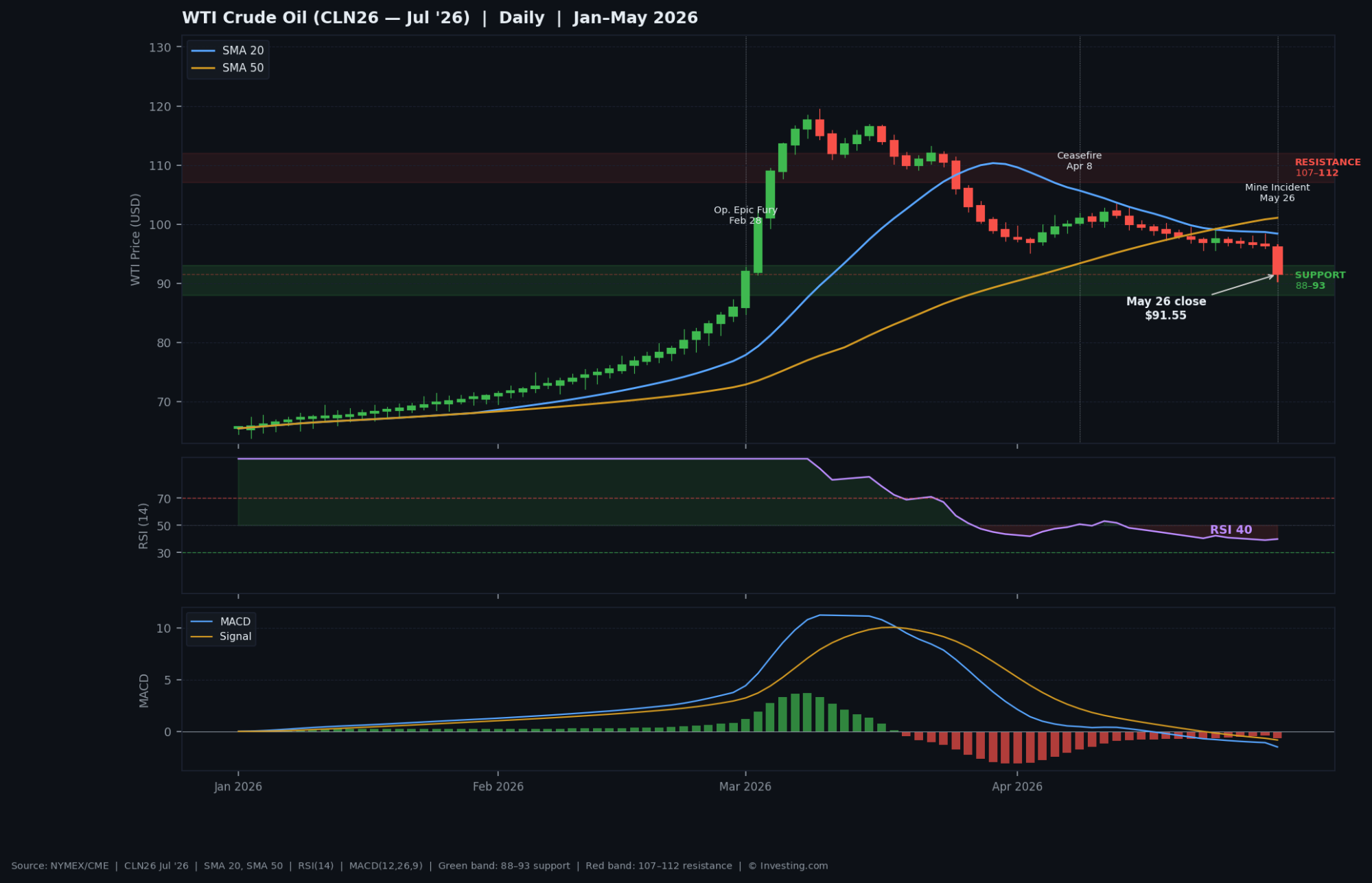
The delicate nature of the ceasefire was underscored by a recent US naval strike on two Iranian vessels attempting to lay mines in the strait. Though described as defensive actions by US Central Command, these events reminded markets that the waterway remains contested and subject to sudden escalations. President Trump described talks as “productive” but warned military action could resume if negotiations failed. He also encouraged more Arab nations to join diplomatic efforts aimed at regional stability.
Despite optimism about diplomatic progress, market participants remain wary. Analysts emphasize that even if a peace framework is agreed upon, restoring full oil production and transport through damaged infrastructure could take months. Currently, an estimated 10 to 12 million barrels per day are off the market due to disruptions. As such, oil inventories continue to decline globally, keeping upward pressure on prices.
Market responses have been mixed; while Brent crude prices showed modest gains amid rising geopolitical tensions, WTI prices have been more sensitive to news about US-Iran negotiations and potential deal outcomes. Investors are closely watching tanker movements through the Strait of Hormuz and updates on production levels for signs of real supply improvements.
Looking ahead, oil price trends will largely depend on whether the US and Iran can finalize their agreement and effectively reopen the strait. A successful deal could lead to further price declines as supply risks diminish. Conversely, any breakdown in talks or renewed conflict could quickly push prices back above recent highs due to fears of prolonged supply interruptions.
In this volatile environment, traders and investors are advised to manage risks carefully, as sharp price swings may continue until clearer geopolitical resolutions emerge. The global energy market remains highly sensitive to developments in the Middle East, particularly concerning the flow of crude oil through one of its most crucial chokepoints.