
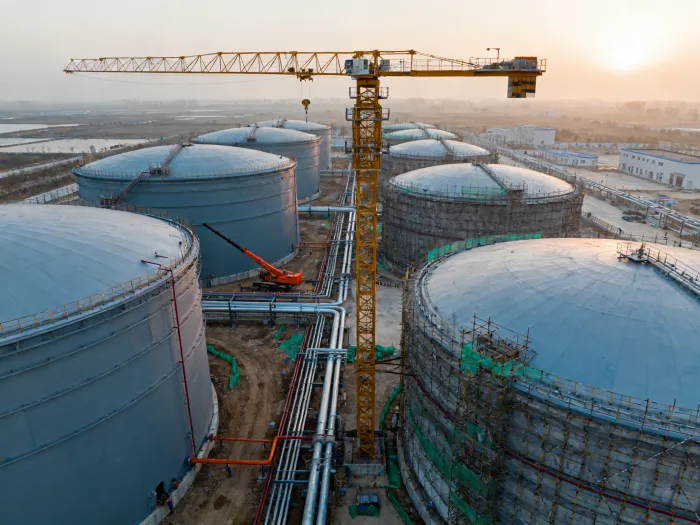
Venezuela has long been recognized as one of the world’s most oil-rich countries. According to data from the Organization of the Petroleum Exporting Countries (OPEC), Venezuela holds an estimated 303 billion barrels of proven crude oil reserves. This figure surpasses the reserves of both Saudi Arabia and the United States combined, making Venezuela a critical player in global energy markets. The majority of these reserves are concentrated in the Orinoco Belt, a vast region in eastern Venezuela spanning approximately 55,000 square kilometers (21,235 square miles).
Despite its immense reserves, Venezuela’s oil production has fallen far below its potential. In the late 1990s and early 2000s, the country consistently produced more than 3 million barrels per day (bpd). However, a combination of insufficient investment and sweeping US sanctions has sharply reduced output. By 2025, Venezuela’s daily production hovered between 1 and 1.2 million bpd. In recent years, production has faced additional challenges from technical difficulties, aging infrastructure, and sporadic operational disruptions.
The International Energy Agency (IEA) reported that in November, Venezuela produced only 860,000 bpd—down from 1.01 million bpd in October and about 1 million bpd in September. The October figure represented a peak since February 2019. In 2023, Venezuela ranked twentieth globally for oil production, holding just a 1.1% share of global output. Last month, it moved up to seventeenth place according to IEA figures.
Export Patterns: Shifting Markets and Strategic Partners
Venezuela’s ability to export oil has been severely affected by international sanctions and logistical constraints. Data from the Observatory of Economic Complexity (OEC) shows that the country exported $4.05 billion worth of crude oil in 2023—a fraction compared to other major exporters such as Saudi Arabia ($181 billion), the United States ($125 billion), and Russia ($122 billion).
The state-owned company Petróleos de Venezuela S.A. (PDVSA) reported that total oil sales abroad reached $17.52 billion in 2024. This reflects an average export volume of around 805,500 barrels per day—a notable increase of 15% over the previous year.
China remains Venezuela’s largest oil buyer, accounting for roughly 80% of all exports. Shipping records from PDVSA indicate that nearly 746,000 bpd were shipped to Chinese ports in November alone. This shift highlights Venezuela’s strategic realignment toward Asian markets amid Western restrictions.
After years of exclusion due to US sanctions imposed in 2019, Venezuelan crude has recently re-entered American markets in limited quantities following special licenses granted to Chevron. These permits allow Chevron to operate under restricted terms with PDVSA as part of a debt-recovery arrangement. As a result, US imports from Venezuela rose to about 150,000 bpd by January 2023.
Cuba also receives Venezuelan oil through government-to-government agreements—estimated at around 20,000-25,000 bpd. These shipments are provided on concessional terms and play an essential role in supporting Cuba’s energy needs.
Other destinations such as Spain, India, and Brazil receive intermittent shipments via spot transactions or complex trading arrangements involving intermediaries. These flows vary month to month due to logistical issues, refinery compatibility, shipping availability, and evolving compliance with sanctions. In many instances, cargoes are routed through third-party traders or blended with other grades to reduce traceability.
Economic Impact: Oil Sector Decline Deepens National Crisis
The decline in oil production has had a profound impact on Venezuela’s economy. The country is heavily dependent on oil exports for revenue, and falling output has exacerbated widespread poverty and hyperinflation.
In 2023, crude oil revenues accounted for about 53% of national exports according to OEC data—totaling $4.05 billion. No data is available for 2024 yet. Earlier years reflect similar trends: in 2022, oil revenues made up approximately 11% of exports ($495 million), while in 2021 crude and refined petroleum contributed $1.1 billion (24% share). In contrast, combined revenues were $4.12 billion with a dominant 70% share in exports for 2020.
The most dramatic decline followed the imposition of broad US sanctions on the sector in 2019; that year Venezuela recorded $16.4 billion in total oil revenue—88% of national exports at the time.
To stabilize the economy amid declining oil income, the government has adopted austerity measures and sought financial support from foreign partners. Inflation remains a persistent challenge; consumer prices have soared well above 100% for several years but rose sharply again recently due to renewed tensions with Washington.
According to Bloomberg’s index, inflation reached an annual rate of 556% by December—up from 219% at the end of June and just 45% earlier in the year.
US Sanctions: Enforcement Actions and Global Implications
Tensions between Washington and Caracas have intensified as the United States increases surveillance and enforcement against Venezuelan-linked oil shipments. President Donald Trump has accused Venezuela’s government of using oil revenue to fund drug-related crime and pledged to keep or sell seized Venezuelan oil cargoes.
This month saw further escalation with a blockade imposed on all sanctioned tankers entering or leaving Venezuelan ports. US forces operating in Caribbean waters are actively pursuing so-called “dark fleet” vessels attempting to evade sanctions; if successful, this would mark the third seizure of a Venezuelan tanker by US authorities this month alone.
US officials claim illicit oil revenues support criminal networks—a charge rejected by Caracas—and maintain that tougher enforcement is needed to disrupt these flows. Although Venezuela represents only a small portion of global supply (with exports estimated at around 900,000 bpd), market analysts warn that disruptions could slow loadings at ports, force cargo rerouting via less direct routes, and heighten shipping risks worldwide.
Any sustained blockade would be devastating for Venezuela since nearly all its exported crude is shipped by sea; further restrictions risk compounding economic hardship domestically while adding uncertainty to global oil prices as traders react to changing supply dynamics.