
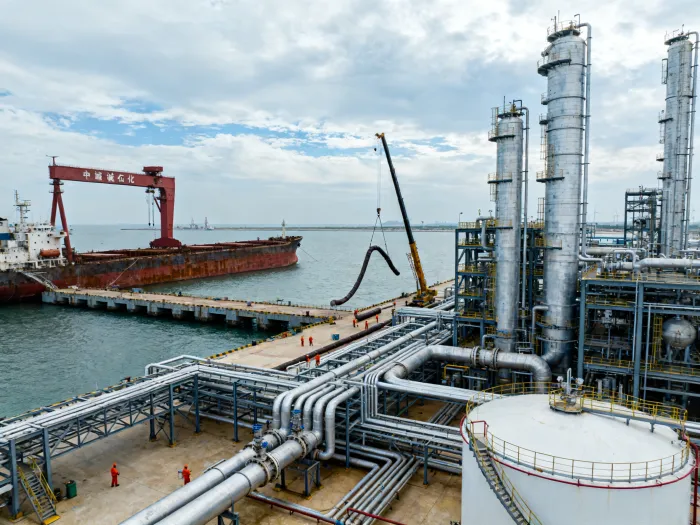
The United States has announced new sanctions targeting over 50 individuals, entities, and vessels linked to Iran’s oil and liquefied petroleum gas (LPG) trade. Among those sanctioned are two Chinese companies: Shandong Jincheng Petrochemical, an independent refinery in Shandong Province, and Rizhao Shihua Crude Oil Terminal, which operates at Lanshan Port. According to the US Department of the Treasury’s Office of Foreign Assets Control (OFAC), these entities have played a significant role in facilitating the trade of Iranian oil, bypassing existing international restrictions.
Shandong Jincheng Petrochemical, commonly referred to as a “teapot” refinery due to its independent status, is accused of purchasing millions of barrels of Iranian oil since 2023. This activity allegedly contravenes US-imposed sanctions designed to limit Iran’s ability to export its energy resources. The OFAC claims that the Rizhao Shihua Crude Oil Terminal has received more than a dozen shipments from vessels belonging to Iran’s so-called “shadow fleet,” a term used for ships that help evade sanctions by obscuring their cargo origins and destinations.
The latest round of sanctions represents an escalation in US efforts to curb Iran’s oil exports by targeting overseas partners who continue to engage in trade with the country. The US administration stated that this is the fourth time it has specifically targeted Chinese refineries for their continued importation of Iranian oil despite ongoing restrictions. These measures are part of a broader strategy aimed at disrupting the financial networks that support Iran’s energy sector, which is seen as a vital source of revenue for the Iranian government.
Officials from the US Treasury emphasized that such actions are intended not only to penalize those directly involved but also to deter other international actors from participating in similar activities. By focusing on entities like Shandong Jincheng Petrochemical and Rizhao Shihua Crude Oil Terminal, the US hopes to send a clear message regarding the consequences of violating sanctions regimes. The administration also highlighted the sophistication of Iran’s “shadow fleet,” which utilizes tactics such as ship-to-ship transfers and falsified documentation to move oil discreetly across global markets.
The imposition of these new sanctions has drawn attention within both diplomatic and energy industry circles. While the Chinese government has not publicly responded to these specific measures, previous rounds of sanctions have led to tensions between Beijing and Washington over issues related to trade and compliance with international regulations. Analysts note that China remains one of the largest consumers of Iranian oil, and Chinese refineries have increasingly relied on non-traditional channels to secure supply amid fluctuating global energy prices.
Industry experts suggest that these sanctions could disrupt certain supply chains but are unlikely to halt trade completely due to the complexity and adaptability of global oil markets. The use of “shadow fleet” vessels underscores ongoing challenges in monitoring and enforcing sanctions effectively. As countries seek alternative routes and partners for energy imports, enforcement becomes more difficult. However, US officials remain committed to identifying and acting against those who facilitate sanctioned transactions.