
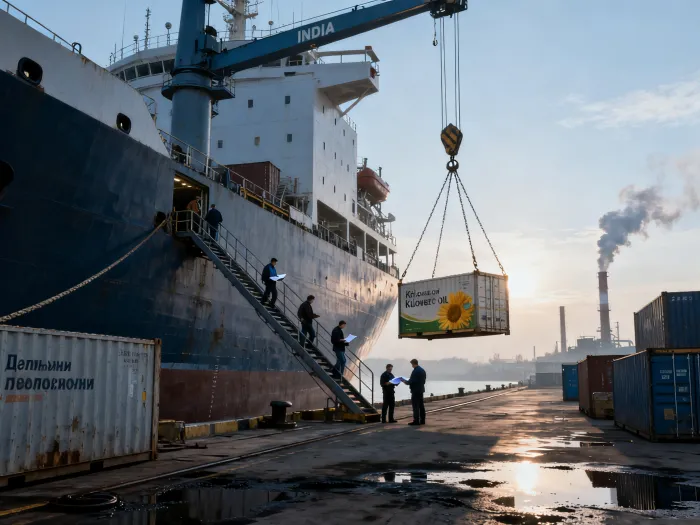
Russia, recognized as the world’s leading producer of sunflower oil, is preparing to significantly increase its exports to India in the coming year. This move is driven by changes in global supply chains, as Ukrainian sunflower oil producers are redirecting their shipments toward European markets. According to a recent Reuters report quoting Russia’s state agricultural export agency, Agroexport, the shift in Ukrainian focus presents Russia with an opportunity to strengthen its position in the Indian market for the 2025/26 season.
India has historically maintained strong trade relations with Russia, particularly in the energy sector. Despite ongoing international pressure from the United States, India continues to seek alternative trading partners to safeguard its economic interests. This search has become more urgent following the imposition of 50% tariffs on Indian goods by the United States, pushing India to diversify its import sources and fortify its relationship with Russia.
Russian agricultural experts are forecasting a record sunflower crop this year, driven largely by farmers shifting their focus from wheat production—Russia’s traditional staple export—to sunflower cultivation. Wheat has become less profitable for many Russian farmers, prompting a move toward crops with higher international demand. Dmitry Rylko, head of consultancy IKAR, estimates that Russia could export up to 5 million tonnes of sunflower oil in the 2025/26 period, with India poised to purchase approximately one-third of this total volume.
India’s appetite for edible oils is substantial. The country imports large quantities of soybean oil and sunflower oil from suppliers such as Argentina, Brazil, Russia, and Ukraine. With Ukrainian suppliers reducing their exports to Asia and prioritizing Europe instead, India is increasingly open to expanding its imports from Russia. An unnamed Indian government source confirmed to Reuters that India is receptive to increasing purchases of Russian sunflower oil, underscoring the growing synergy between the two nations.
The international market for edible oils is experiencing significant adjustments as trade routes evolve and new partnerships are forged. Mikhail Maltsev, who heads Russia’s Oils and Fats Union, reported that vegetable oil production in Russia—including soybean and rapeseed oil—is expected to rise by 7.5% this year. Total output may exceed 10.5 million tonnes, marking a new milestone for the sector. Maltsev also predicted record vegetable oil exports for Russia in the current year, highlighting the country’s expanding role in meeting global demand.
India remains the world’s largest importer of edible oils and relies heavily on international suppliers to satisfy domestic consumption needs. As trade patterns shift due to geopolitical factors and tariff changes, both Russia and India stand to benefit from closer cooperation in agricultural exports. The anticipated increase in Russian sunflower oil shipments not only strengthens bilateral economic ties but also contributes to greater stability within the global edible oil market.
The evolving landscape of edible oil trade reflects broader strategic considerations for both India and Russia. For India, diversifying sources of vital imports such as sunflower oil helps mitigate risks associated with global political tensions and trade barriers. For Russia, capitalizing on its record harvest and expanding export capacity offers economic advantages while reinforcing its position as a key player in international agriculture.
As Ukrainian producers prioritize European markets over Asian ones, Russian exporters are well-positioned to fill the resulting gap in Indian supply chains. The mutual interest demonstrated by both governments signals a deepening partnership that could shape future trends in global commodity trading. With production levels set to reach new highs and demand remaining strong, Russia’s increased sunflower oil exports are poised to play an important role in supporting India’s food security and fostering robust economic relations between the two countries.
Related topics:
