
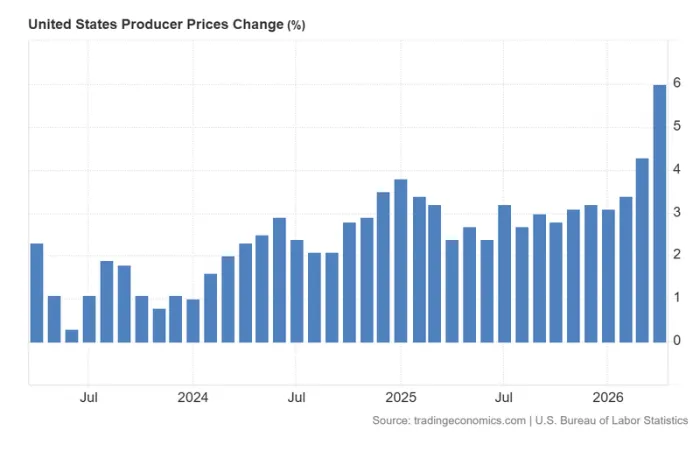
The US Producer Price Index (PPI) experienced a sharp increase in April, reaching its highest level since December 2022. According to the latest data from the US Bureau of Labor Statistics, the PPI rose by 1.4% month-over-month, far surpassing analysts’ forecast of a 0.5% rise. On an annual basis, the PPI climbed from 4.3% in March to 6% in April. This jump was largely driven by a notable 15.6% monthly increase in gasoline prices, reflecting growing concerns over escalating tensions in the Middle East involving the US, Israel, and Iran.
The rise in producer prices signals renewed inflationary risks as higher costs for gasoline and other inputs may eventually pass through to consumer prices. Companies have so far absorbed much of these cost increases, but prolonged pressures could lead to higher prices for consumers. This development has prompted Federal Reserve officials to consider maintaining or increasing interest rates to curb inflation. Members of the Federal Open Market Committee, including Boston Fed President Susan Collins and Minneapolis Fed President Neel Kashkari, indicated that additional rate hikes might be necessary if inflation continues to rise.
Meanwhile, the US Energy Information Administration (EIA) reported a sharp decline in crude oil inventories for the third consecutive week. Crude stocks fell by 4.306 million barrels, more than double the expected drop of 2.1 million barrels and exceeding last week’s decline of 2.313 million barrels. Gasoline inventories also decreased significantly by 4.084 million barrels. These inventory reductions suggest stronger demand and increased exports as global buyers secure energy supplies amid ongoing geopolitical uncertainties.
Despite these inventory drops, oil prices showed mixed reactions in the market. West Texas Intermediate crude futures eased slightly by 0.80%, closing at $101 per barrel. In contrast, gasoline futures fell sharply by over 6%, settling at $3.47 per gallon. The fluctuations highlight market sensitivity to supply changes and geopolitical developments.
In broader economic markets, US stock indexes showed varied movements following these reports. The S&P 500 rose by 0.58%, reaching 7,444 points, while the Nasdaq 100 gained just over 1%. Conversely, the Dow Jones Industrial Average slipped slightly by 0.14%. The US Dollar Index strengthened modestly by 0.19% to stand at 98.45 points.
These economic indicators come amid heightened global tensions and significant diplomatic engagements. Recently, US President Donald Trump met with Chinese President Xi Jinping in Beijing, accompanied by leading business figures such as Elon Musk and Tim Cook. Their discussions focused on trade relations, technology cooperation, regional security issues including Taiwan, and energy supply routes like the Strait of Hormuz.
Overall, the combination of rising producer prices and falling oil inventories underscores growing inflationary pressures and tighter energy markets influenced by geopolitical factors. Policymakers and markets remain attentive to these trends as they could impact economic growth and consumer costs in the near term.