
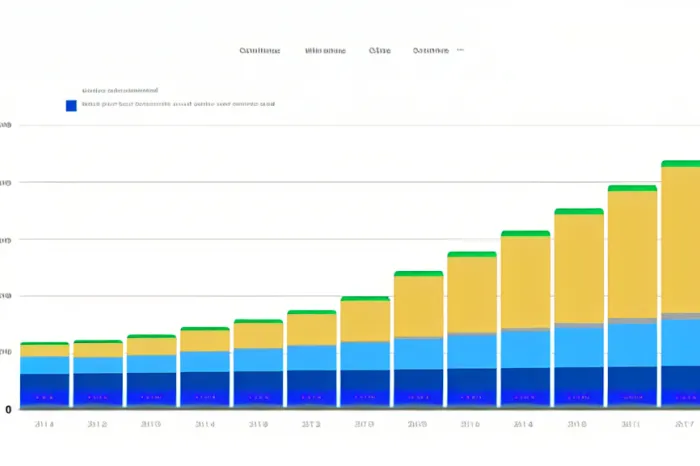
New data from the U.S. Energy Information Administration (EIA) shows that renewable energy generation in the United States increased by more than 11% during the first quarter of 2026 compared to the same period last year. This growth was driven primarily by strong expansions in solar, wind, hydropower, and battery energy storage capacities.
According to EIA’s latest report, utility-scale solar energy experienced the highest growth at nearly 24%, followed by hydropower at almost 22%, small-scale solar at nearly 12%, and wind energy at just over 2%. Battery storage capacity also saw a notable increase of 8.5% during this period. Meanwhile, electricity generation from coal-fired power plants declined significantly by over 11%, while natural gas and nuclear power showed only marginal increases.
Renewable sources including solar, wind, hydropower, biomass, and geothermal accounted for over 28.6% of total U.S. electricity generation in early 2026. Combined wind and solar generation alone contributed more than 20% of domestic electricity production, surpassing nuclear power by over 14% and coal by more than 31%.
Looking ahead, the EIA projects that utility-scale solar, wind, and battery storage will add more than 80.6 gigawatts (GW) of new clean energy capacity nationwide by March 31, 2027. During the same period, fossil fuel and nuclear generating capacities are expected to decline by over 4.2 GW. Renewable energy’s share of total U.S. utility-scale generating capacity is forecast to rise from 33.6% in April 2026 to approximately 36.6% by early 2027.
Specifically, utility-scale solar capacity is expected to increase by about 42.6 GW, raising its share from 12.8% to nearly 15.7%. Wind capacity is projected to grow by approximately 14.1 GW, including an addition of more than 4 GW from offshore wind projects. Battery storage deployment is also accelerating rapidly; after increasing by over 17 GW in the past year, an additional 23.5 GW is expected to be added by April 2027—representing growth of more than 50%.
Further forecasts from both EIA and the Federal Energy Regulatory Commission (FERC) indicate that renewable energy expansion will continue strongly through at least 2030. The EIA’s Annual Energy Outlook anticipates utility-scale solar capacity will grow from about 154.5 GW at the end of 2025 to nearly 257.7 GW by 2030, while wind capacity is expected to increase from around 159 GW to approximately 204.4 GW during the same timeframe. Offshore wind capacity alone could grow nearly tenfold by the decade’s end.
FERC’s recent Energy Infrastructure Update supports this outlook, projecting utility-scale solar could add more than 86 GW of new capacity between 2026 and 2028, with wind contributing close to an additional 20 GW. In contrast, coal and oil generating capacities are expected to decline significantly with no new nuclear additions anticipated.
Ken Bossong, Executive Director of the SUN DAY Campaign, commented on these findings by noting that renewable energy and battery storage continue to dominate new electricity capacity additions in the United States despite ongoing policy challenges. He emphasized that this trend reflects strong momentum in the country’s transition toward cleaner energy sources.
Overall, these reports highlight a clear shift in the U.S. electricity sector as renewable technologies expand rapidly while traditional fossil fuel-based generation declines. The growing share of renewables is reshaping the energy landscape and supports national goals for reducing carbon emissions and advancing sustainable power generation.