
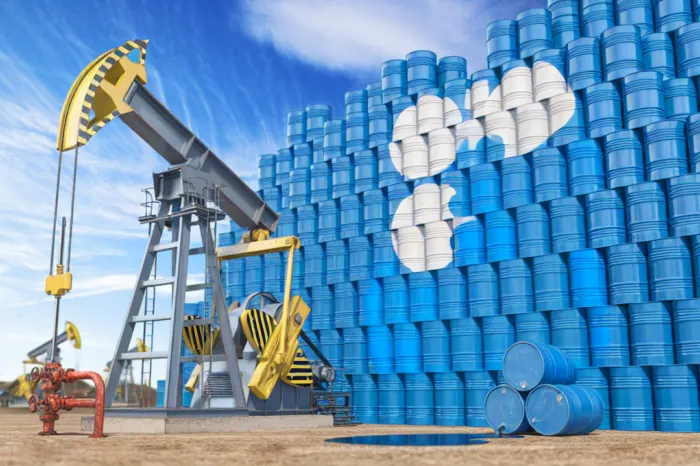
OPEC’s oil production has fallen sharply, reaching levels not seen since the early 2000s, as the ongoing conflict in the Persian Gulf disrupts exports and forces major producers to reduce output. The closure of the Strait of Hormuz, a crucial global oil shipping route, has led to significant supply constraints. This situation has prompted OPEC to revise its global oil demand forecasts downward for 2026, while expecting a stronger recovery in 2027.
In April, OPEC’s crude output dropped by approximately 1.73 million barrels per day (bpd), settling at around 18.98 million bpd. The broader OPEC+ alliance, which includes non-OPEC producers such as Russia, saw a similar decline of about 1.74 million bpd, bringing total production down to 33.19 million bpd. Saudi Arabia experienced the largest production decrease among the members, with output falling to its lowest level since 1990. The kingdom reported a loss of 651,000 bpd in April alone, marking a dramatic 42% drop since February.
The production cuts come as Saudi Arabia reroutes more crude through the East-West Pipeline to the Red Sea port of Yanbu, bypassing the closed Strait of Hormuz. Despite this effort, disruptions caused by attacks on energy infrastructure and the geopolitical tensions in the region have severely limited export capacity. Kuwait and Iraq also recorded significant declines in production due to their heavy reliance on the Hormuz route.
The United Arab Emirates stands out as an exception within the Gulf countries. Leveraging its terminal on the Gulf of Oman at Fujairah, it managed to increase production slightly in April, producing between 3.2 and 3.6 million bpd. This advantage comes from bypassing the Strait of Hormuz bottleneck altogether. The UAE recently exited OPEC and OAPEC with plans to expand production capacity to 5 million bpd by 2027.
In contrast, Venezuela and Libya increased their output during April, although these gains were insufficient to offset losses from Gulf producers. Venezuela’s exports rose to their highest level since 2018 after eased U.S. sanctions improved operations. Libya also hit a decade-high production level despite ongoing regional instability.
Reflecting these supply challenges and geopolitical risks, OPEC lowered its forecast for global oil demand growth in 2026 to 1.17 million bpd from an earlier estimate of 1.38 million bpd. However, it raised its forecast for demand growth in 2027 by 200,000 bpd to 1.54 million bpd, signaling expectations for recovery once current tensions ease. This outlook contrasts with other forecasters like the International Energy Agency (IEA), which predicts a contraction in demand this year.
Overall, OPEC stressed that global economic growth remains resilient despite the Middle East conflict and supply disruptions. However, ongoing challenges related to transport routes and regional security continue to weigh heavily on oil markets worldwide.