
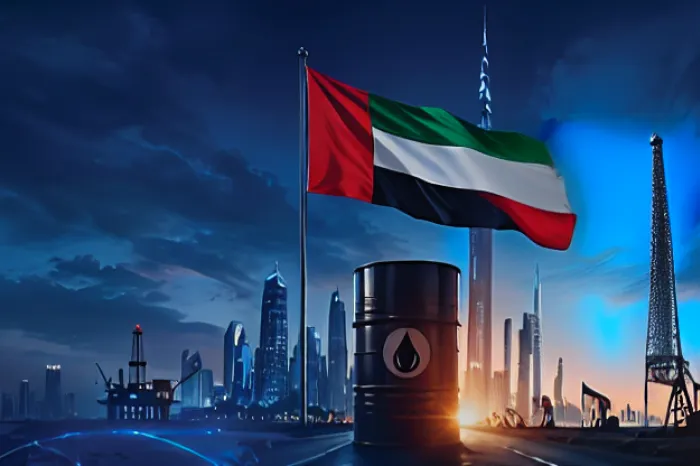
The United Arab Emirates officially left the Organization of the Petroleum Exporting Countries (OPEC) and the broader OPEC+ alliance on May 1, 2026, ending a membership that lasted nearly six decades. This decision marks a major shift in the global oil landscape, as the UAE seeks greater freedom to increase its oil output and respond flexibly to market demands. The move follows a thorough review of the nation’s production policies, capacity, and long-term energy goals.
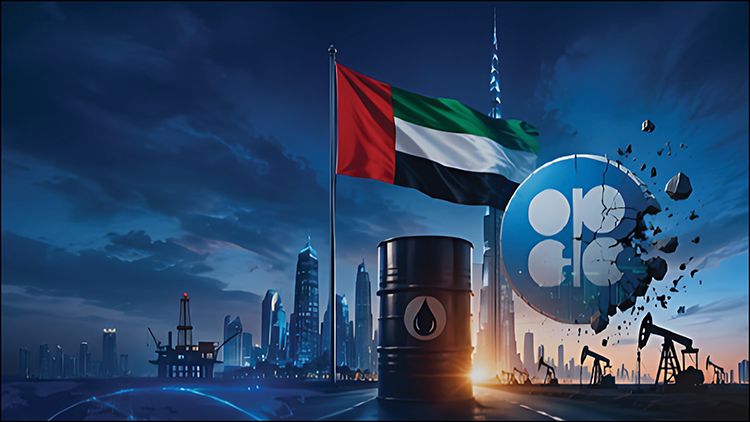
For years, the UAE’s oil production was restricted by OPEC quotas, limiting output to around 3.2 million barrels per day despite having a capacity close to 5 million barrels per day. By leaving OPEC, the UAE’s state-owned Abu Dhabi National Oil Company (ADNOC) gains the sovereign ability to expand production according to national interests without cartel-imposed limits. ADNOC has already announced a $150 billion expansion plan aimed at increasing capacity to 5 million barrels per day by 2027.
A critical advantage for the UAE is its ability to bypass traditional export chokepoints. The Abu Dhabi Crude Oil Pipeline (ADCOP), running from Habshan to Fujairah, offers a Hormuz-independent route capable of transporting 1.5 million barrels daily. This pipeline provides ADNOC with strategic flexibility in exports, especially to Asian markets like China, India, South Korea, and Japan, which consume over three-quarters of Gulf oil exports.
The UAE’s departure weakens OPEC+, which loses one of its few members with significant spare production capacity. Without the UAE’s nearly 5 million barrels per day potential supply buffer, Saudi Arabia now faces increased pressure to manage global oil price stability alone. This shift raises concerns about OPEC’s future cohesion and whether other members might follow the UAE’s example.
Market analysts warn that if the Strait of Hormuz reopens fully after current regional tensions ease, Gulf producers could rapidly increase output, potentially destabilizing oil prices. The International Monetary Fund highlights that Saudi Arabia requires oil prices near $88 per barrel for budgetary balance, while the UAE needs only about $45 per barrel. This difference may limit Saudi Arabia’s willingness to engage in price competition.
Despite leaving OPEC, the UAE affirms its commitment to maintaining market stability and continuing investments across oil, gas, and renewable sectors. Energy Minister Suhail Al Mazrouei emphasized that the exit was timed to minimize disruption for other producers and does not reflect any discord with OPEC members.
Overall, the UAE’s exit signals a new era in Gulf oil politics where national strategies prioritize production flexibility over collective quota discipline. This development is likely to reshape global energy markets by introducing more competition among producers and increasing volatility in pricing mechanisms. As ADNOC expands capacity and leverages independent export routes, it positions itself as a major player capable of influencing future oil market dynamics.