
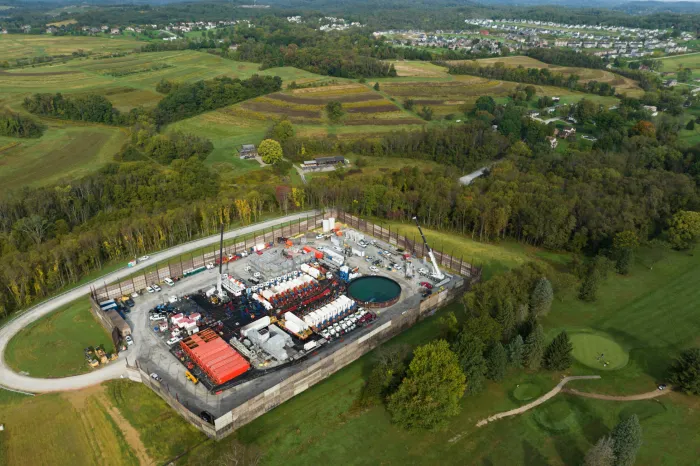
Pennsylvania is preparing to revitalize its natural gas sector as part of a broader economic strategy, while Colorado takes a more cautious approach by restricting investments in its natural gas infrastructure. These contrasting policies highlight the evolving landscape of the natural gas industry amid environmental and economic challenges.
In Pennsylvania, State Treasurer Stacy Garrity, the Republican nominee for governor, unveiled an ambitious plan aimed at expanding the state’s natural gas production. Speaking to the Marcellus Shale Coalition, Garrity emphasized her commitment to ending restrictions on hydraulic fracturing sites immediately upon taking office. She envisions a future where Pennsylvania’s natural gas fuels local economies and powers industries nationwide and globally. Garrity highlighted the potential to create over 200,000 jobs and generate $6 billion in revenue, positioning Pennsylvania as a national energy leader.
Garrity criticized the current trajectory of the state, pointing out that Pennsylvania ranks low on various economic and social metrics. She proposed fast-tracking permits for drilling operations, reducing regulatory burdens, and revising renewable energy mandates to support natural gas growth. Her plan focuses on leveraging Pennsylvania’s rich history in energy production and tapping into shale gas reserves to address rising electricity costs driven by increasing demand from sectors like artificial intelligence data centers.
Meanwhile, in Colorado, state regulators have taken a more restrained stance toward natural gas infrastructure investments. The Colorado Public Utilities Commission recently rejected large portions of Xcel Energy’s proposed $2.9 billion investment plan for upgrading its natural gas network. Regulators expressed concerns about assuming continued growth in natural gas demand despite state policies encouraging residents to switch to electric heating and cooling to reduce emissions.
The commission warned that overbuilding gas infrastructure could lead to higher costs for consumers while benefiting the utility’s profits. This decision was hailed by environmental groups advocating for cleaner energy alternatives. They argue that despite declining natural gas usage, customer bills have risen significantly due to infrastructure spending. Xcel Energy defended its plans by citing ongoing demand for natural gas and efforts to support electrification through incentives and programs promoting all-electric homes.
These developments illustrate a nationwide debate over the future role of natural gas in energy portfolios. Pennsylvania’s approach aims to boost economic growth and job creation through expanded fossil fuel development. In contrast, Colorado is prioritizing environmental goals and financial prudence by limiting investments that may become obsolete as electrification advances.
As states navigate this complex transition, balancing energy reliability, economic interests, and climate commitments remains a critical challenge. Pennsylvania’s proposed regulatory reforms could accelerate drilling activities and increase production capacity. At the same time, Colorado’s regulatory framework seeks to align utility investments with shifting consumer preferences and environmental policies.
The outcomes of these divergent strategies will influence regional energy markets and potentially shape national discussions on managing natural gas resources amid evolving energy demands and climate objectives.