
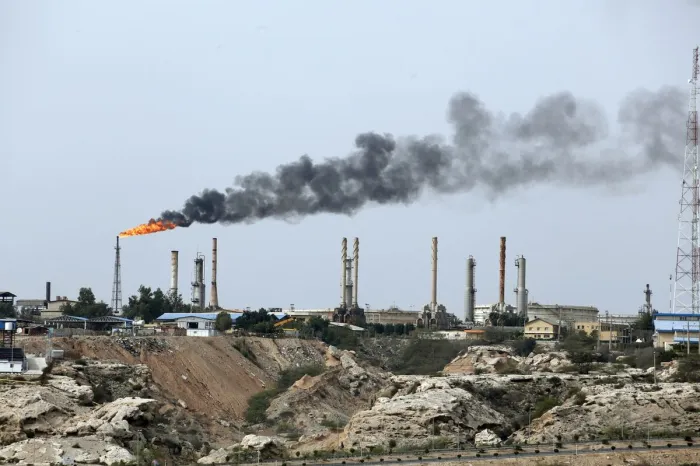
The Organization of the Petroleum Exporting Countries (OPEC) has revealed significant changes in oil production among its member nations for May, with Iran experiencing a steep drop while Venezuela’s output rises notably. According to OPEC’s latest monthly report, total crude oil production among member countries averaged 33.13 million barrels per day, reflecting a decrease of 185,000 barrels daily compared to April.
Iran stands out as the main contributor to this decline, with its crude oil output falling sharply by 19%, or roughly 546,000 barrels per day, reducing production to 2.33 million barrels daily. This represents almost a 30% reduction from Iran’s production levels last year. The downturn is largely linked to ongoing geopolitical tensions and the impact of U.S. sanctions that have severely hindered Iran’s ability to export oil through its ports.
In contrast, Venezuela’s crude oil production showed promising growth in May. The country produced approximately 1.07 million barrels per day, an increase of over 3% from April and about 14% higher than its output during the previous year. This improvement follows months of political turmoil connected to U.S. military actions targeting Nicolás Maduro’s administration. Despite these challenges, the United States remains a major importer of Venezuelan oil, purchasing around 558,000 barrels daily last month. India and several European countries continue as key buyers as well, importing roughly 427,000 and 169,000 barrels per day respectively.
Other OPEC members such as Iraq and Kuwait also reported increases in their output for May, with gains of 75,000 and 16,000 barrels per day respectively. Meanwhile, Libya and Nigeria experienced slight reductions in their oil production.
Amidst the current geopolitical uncertainties—especially tensions in the Middle East—OPEC has lowered its global oil demand forecasts. The organization now expects demand growth of about 970,000 barrels per day for this year, down from an earlier estimate of 1.17 million barrels daily. For next year, OPEC projects a stronger rebound with demand increasing by approximately 1.7 million barrels per day.
This revised outlook aligns with assessments from other energy agencies such as the U.S. Energy Information Administration (EIA) and the International Energy Agency (IEA). The EIA anticipates a global oil demand drop close to one million barrels per day compared to last year, while the IEA foresees a smaller decline near 420,000 barrels daily.
Following these developments and President Donald Trump’s decision to cancel planned U.S. strikes on Iran, oil prices have shown signs of stabilization. U.S. crude prices fell nearly 3% after the announcement, with West Texas Intermediate crude trading around $87 per barrel—a notable retreat from recent highs approaching $120 per barrel. This easing in prices has also contributed to lower gasoline costs for American consumers ahead of the summer driving season.