
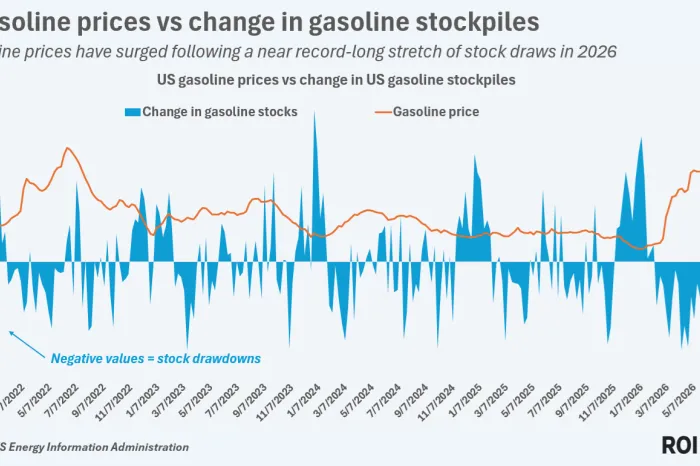
U.S. gasoline inventories have been falling at an unprecedented rate since early February, raising concerns about the fuel market’s ability to meet demand during the upcoming summer driving season. While current gasoline stock levels are not at record lows, the speed at which these reserves have been drawn down is unusual and noteworthy.
According to the Energy Information Administration (EIA), gasoline inventories stood at 211.6 million barrels for the week ending May 22, marking the lowest level for this time of year since 2014 and below the five-year average. However, it is the rapid decline—from 259.1 million barrels in early February—that has caught the attention of energy analysts. Over approximately 15 weeks, stocks dropped by 47.5 million barrels, a drawdown unmatched in weekly data going back to 1990.
This sharp inventory reduction has occurred despite strong refinery operations. U.S. refineries processed nearly 17 million barrels of crude oil per day in late May, with utilization rates above 94%, producing about 9.9 million barrels of finished gasoline daily. Yet, gasoline stocks continued to fall by an additional 2.6 million barrels during the same period. Demand alone does not explain this trend, as gasoline consumption has remained steady or slightly below last year’s levels.
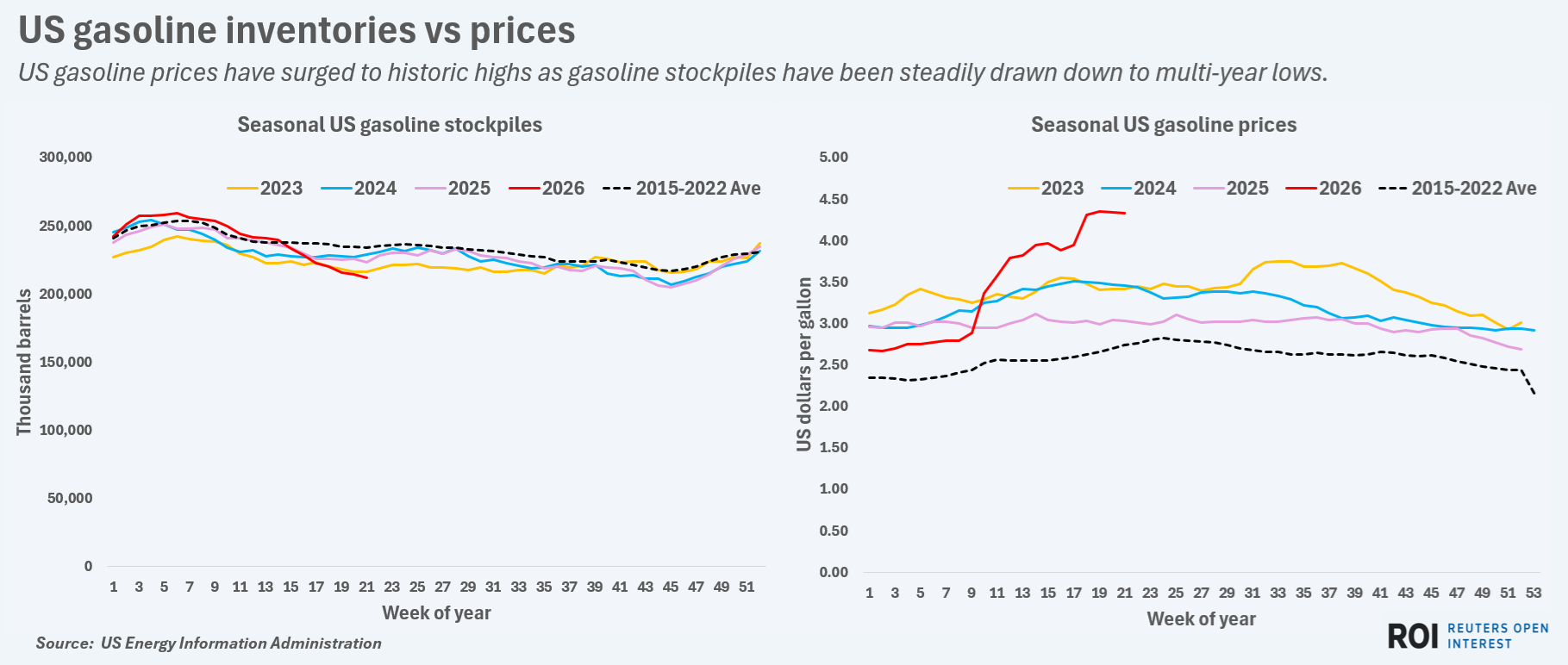
A significant factor behind the rapid depletion is increased exports amid global supply disruptions caused by geopolitical tensions, particularly the near-total closure of the Strait of Hormuz following conflict involving Iran. The U.S., which has become a major exporter of petroleum products, shipped more gasoline abroad to meet international demand. This dynamic has drained domestic inventories even as refineries worked at high capacity.
The Strategic Petroleum Reserve (SPR) has also seen historic drawdowns, releasing crude oil to maintain refinery supply chains. However, crude oil releases do not immediately translate into gasoline availability because it requires further processing and distribution before reaching consumers. Additionally, distillate fuel inventories, including diesel essential for transportation and industry, remain below normal levels, signaling broader supply tightness.
Looking ahead, experts warn that this rapid inventory drawdown leaves little room for error if unexpected events occur—such as refinery outages, pipeline issues, or renewed geopolitical conflicts—that could disrupt supply chains further. Gasoline prices have already surged by about 50% since February and hover near four-year highs around $4.33 per gallon nationwide.
While a diplomatic resolution restoring tanker traffic through critical chokepoints like the Strait of Hormuz could ease pressure on supplies and stabilize prices, any escalation in hostilities risks pushing gasoline costs higher during peak driving months. With summer demand expected to rise as families travel for vacations and holidays, maintaining adequate fuel stocks will be crucial.
In summary, although there is no immediate shortage forecasted, the rapid pace at which U.S. gasoline inventories have fallen highlights vulnerabilities in the supply system amidst ongoing global challenges. Market watchers will be closely monitoring inventory reports and geopolitical developments as they could significantly influence fuel availability and prices in the coming months.