
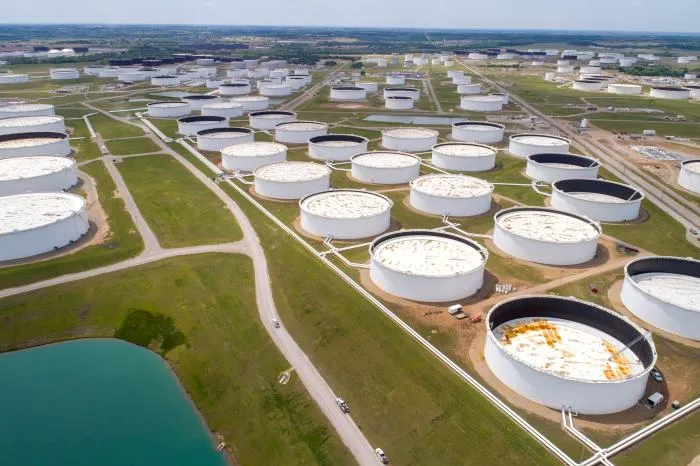
The United States is experiencing notable shifts in its crude oil and gasoline inventories as demand remains strong and geopolitical tensions in the Middle East continue to impact global oil supplies. According to the latest data from the Energy Information Administration (EIA), U.S. crude oil stockpiles fell sharply by 7.9 million barrels in the week ending May 15, significantly exceeding analysts’ expectations of a 2.9 million-barrel decrease. This decline reflects persistent high demand and ongoing disruptions in oil production overseas.
Crude inventories at the Cushing, Oklahoma delivery hub also dropped by 1.6 million barrels during the same period, while exports from the U.S. Strategic Petroleum Reserve fell by a record 9.9 million barrels last week. Analysts point out that this substantial draw in both commercial and strategic inventories signals tightening supply conditions. Despite a slight rise in net crude imports by 3,000 barrels per day, exports increased by 112,000 barrels per day to reach 5.6 million barrels per day, indicating robust international demand.
Gasoline stocks also declined, falling by 1.5 million barrels to 214.2 million barrels, although this was somewhat less than market expectations of a 2.1 million-barrel drawdown. Gasoline consumption remained strong at 8.77 million barrels per day, pushing total product supplied higher by 558,000 barrels per day to 20.45 million barrels daily. Experts note that gasoline demand is holding firm despite pump prices staying above $4.50 per gallon, a level that typically dampens consumer usage.
Meanwhile, distillate inventories, which include diesel and heating oil, increased slightly by 372,000 barrels to 102.9 million barrels, contrary to forecasts expecting a decline. Refinery crude runs fell modestly by 80,000 barrels per day, with refinery utilization rates dipping slightly to 91.6%. This drop may reflect adjustments as refiners respond to inventory changes and shifting demand patterns ahead of the summer driving season.
On a broader scale, the EIA’s recent annual report on U.S. proved reserves revealed a slight decrease in both crude oil and natural gas reserves at the end of 2024 compared with the previous year. Crude oil reserves dropped by 1%, from 46.4 billion barrels to 46 billion barrels, while natural gas reserves declined by 3%, from 603.6 trillion cubic feet to 583.9 trillion cubic feet. Production of crude oil increased by 2%, and natural gas production rose by about 1%, highlighting ongoing efforts to meet demand despite shrinking reserves.
Geographically, Texas saw the largest decline in crude oil reserves with a 3% drop, followed by North Dakota with an 11% reduction. Conversely, New Mexico experienced an 8% increase in crude oil reserves, marking the largest gain among states in 2024. For natural gas, Texas again reported the biggest decline at 7%, with Louisiana’s reserves falling sharply by 26%. Alaska recorded the highest increase in natural gas reserves at 7%.
The EIA also highlighted continued volatility due to Middle East disruptions impacting global oil markets. The agency noted that key producers including Iraq, Saudi Arabia, Kuwait, UAE, Qatar, and Bahrain collectively shut in approximately 10.5 million barrels per day of crude oil production in April amid geopolitical tensions affecting the Strait of Hormuz’s operations.
These disruptions have pushed global oil inventories down more steeply than previously forecasted, leading to upward revisions of U.S. benchmark West Texas Intermediate (WTI) price estimates for the remainder of the year. The EIA projects WTI prices will average $95 per barrel in May before gradually declining through late 2026 and into early 2027 as supply conditions stabilize.
With summer driving season approaching and gasoline demand expected to rise further, analysts caution that continued inventory drawdowns could tighten supplies even more. Market watchers will be closely monitoring refinery activity levels and export flows as well as geopolitical developments that could influence energy availability and prices moving forward.