
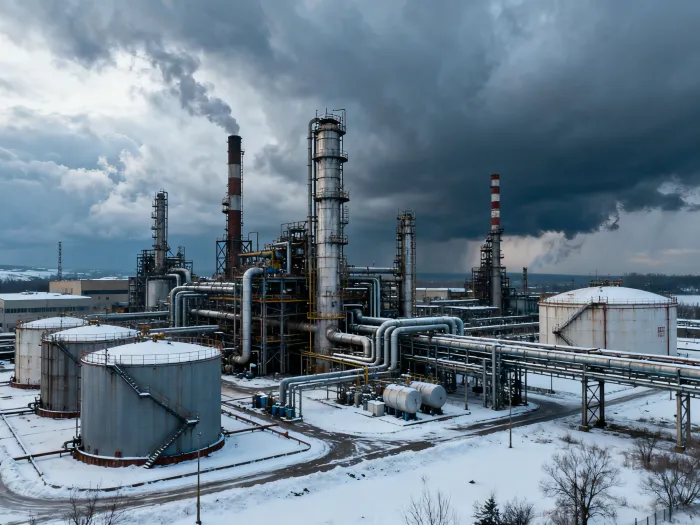
Serbia’s only oil refinery, owned by Russian companies, is at risk of shutting down within days due to United States sanctions. President Aleksandar Vučić announced in a televised address that if the US does not lift its restrictions, the refinery may halt operations in four days. This situation could pose a serious threat to Serbia’s fuel supply as winter approaches. The NIS refinery, operated by Russian energy giants Gazprom Neft and Gazprom, is crucial for producing gasoline, diesel, and jet fuel for the country.
Although Serbia currently has enough fuel reserves for the short term, the closure of its sole refinery could interrupt local production and disrupt the national economy. President Vučić emphasized that sanctions imposed against Russian companies ultimately impact Serbia itself. He expressed concern that the restrictions might affect supply lines and electricity generation, deepening the economic challenges facing the country.
Government Response and Ownership Structure
In response to the crisis, President Vučić outlined a possible solution regarding the ownership of NIS. He stated that Russian shareholders have 50 days to sell their stake in the company. If they do not act within this period, the Serbian government plans to take over operations and make an offer to buy out their shares. Currently, Gazprom Neft owns 44.9% of NIS, Gazprom holds 11.3%, Serbia possesses 29.9%, and smaller shareholders own the remainder.
Washington has demanded complete Russian divestment from NIS. On November 15th, US authorities gave NIS until February 13th to find buyers for the Russian stake. Since sanctions took full effect in October after several waivers, banks have stopped processing payments for NIS, and Croatia’s JANAF pipeline has ceased crude oil deliveries to Serbia. These developments forced Serbia to seek alternative sources of crude oil just before winter.
The Serbian central bank has also declared it will stop all payment transactions for NIS if its operating license is not extended. These actions highlight the financial and operational pressure mounting on both the refinery and the broader energy sector in Serbia.
Fuel Reserves and Supply Management
Despite these challenges, Serbian officials maintain that there are enough fuel reserves to meet domestic demand in the immediate future. According to President Vučić, NIS currently holds 55,000 metric tons of diesel and 50,000 tons of gasoline in its reserves—enough to last until late December if consumption remains steady. The state itself has additional reserves amounting to 184,000 tons of diesel and 19,000 tons of gasoline.
Serbia also expects further imports: an additional 20,000 tons of diesel and 35,000 tons of gasoline are scheduled to arrive during December and January. These efforts aim to ensure uninterrupted supply for consumers and critical infrastructure during winter months.
NIS reported that it has placed its refinery on ‘hot standby,’ meaning it can resume operations quickly once crude oil supplies become available again. The company assured that it continues supplying petroleum products without interruption thanks to previously secured stocks.
Broader Implications for Serbia’s Energy Sector
The ongoing sanctions have raised significant concerns about Serbia’s long-term energy security and economic stability. The situation underscores how international political actions can affect local economies—especially those heavily reliant on imported energy resources or foreign investment.
President Vučić stressed that sanctions against Russia have unintended consequences for countries like Serbia that depend on Russian companies for vital industries such as oil refining. The threat of a refinery shutdown comes at a time when reliable energy supplies are critical for heating homes, powering businesses, and maintaining public services through harsh winter conditions.
As negotiations continue over ownership changes at NIS and alternative supply routes are explored, Serbian leaders face complex decisions about balancing geopolitical pressures with domestic needs. The outcome will likely shape both Serbia’s immediate energy landscape and its future strategies for securing independent energy resources.