
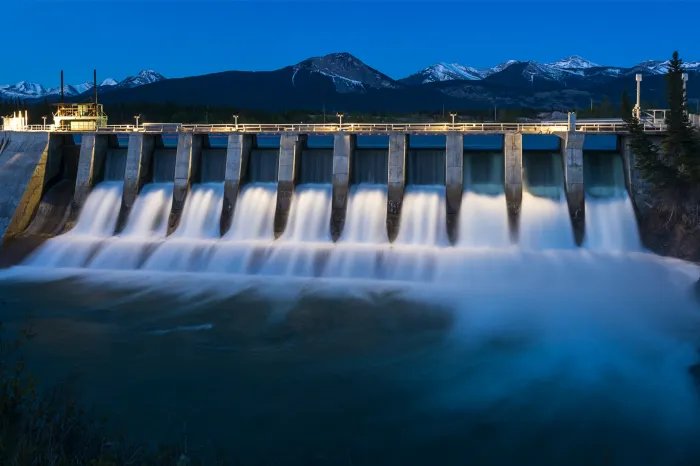
Europe is facing growing challenges in managing its natural gas supplies as Italy’s hydropower production declines sharply, putting additional pressure on the region’s energy security. Italy, the third-largest consumer of natural gas in Europe, has experienced a significant drop in hydroelectric output this year due to a warm and dry winter combined with a reduced Alpine snowpack. This decrease has forced Italian power producers to rely more heavily on natural gas plants, increasing gas consumption during a critical period when Europe aims to replenish its gas storage ahead of winter.
Hydropower has traditionally acted as a stabilizing force in Italy’s electricity system, allowing power firms to reduce natural gas usage when hydro output peaks. However, with hydro production down by more than 25% compared to usual levels, Italy’s gas-fired power generation has surged to its highest point in four years. The nation’s hydropower peak has likely already passed for the season, leaving upcoming electricity demand increases—such as those from summer heatwaves—largely dependent on natural gas.
This shift from hydropower to gas not only raises electricity costs in Italy but also impacts the broader European market. Hydroelectric plants provide low-cost, dispatchable power that helps keep overall system expenses down and frees up natural gas for storage. With hydro output reduced, Italy’s increased gas consumption slows the replenishment of regional gas storage tanks, which currently stand at about 41% capacity across Europe—well below average levels needed for winter preparedness.
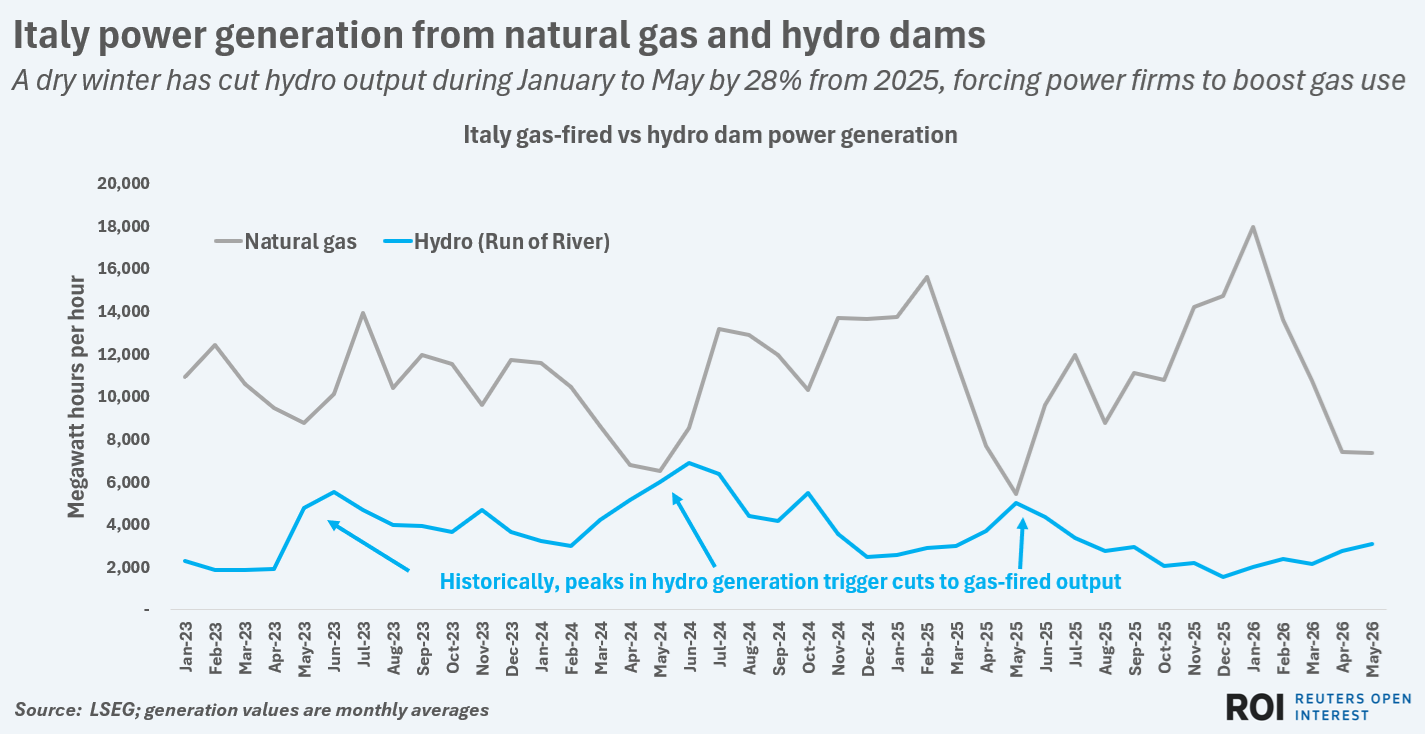
Compounding these supply issues is the ongoing economic strain across Europe triggered by elevated energy prices and geopolitical tensions. The recent conflict in the Middle East and disruptions to Persian Gulf energy supplies have prolonged high energy costs and inflation. Economists warn that Europe’s economic recovery is slowing more than initially expected, with growth forecasts revised downward due to sustained higher inflation and interest rates. This economic pressure further complicates efforts to secure stable energy supplies and invest in long-term solutions.
Italy’s hydropower system faces structural challenges beyond seasonal fluctuations. Climate change is reducing Alpine snowpack and altering rainfall patterns, making hydropower output increasingly unpredictable and less reliable as a clean energy source. Warmer winters diminish water availability during crucial spring melt periods, while hotter summers increase evaporation rates from reservoirs.
As Europe enters the warmer months—when gas consumption typically falls and storage refilling accelerates—the need for natural gas in southern countries like Italy is expected to rise. This dynamic threatens to tighten gas markets further and raise prices just as European nations strive to rebuild their inventories after winter depletions.
Energy analysts emphasize the importance of monitoring Italy’s hydro reservoir levels closely alongside traditional LNG flows and storage targets. The interplay between diminishing hydropower generation and natural gas demand highlights vulnerabilities in Europe’s energy framework amid ongoing geopolitical uncertainties and climate-related shifts.
In summary, Italy’s weakening hydropower output is becoming a key factor limiting Europe’s ability to restore natural gas reserves efficiently. Coupled with prolonged economic challenges from elevated energy costs, these developments underscore the complexity of securing stable, affordable energy across the continent in an evolving global landscape.