
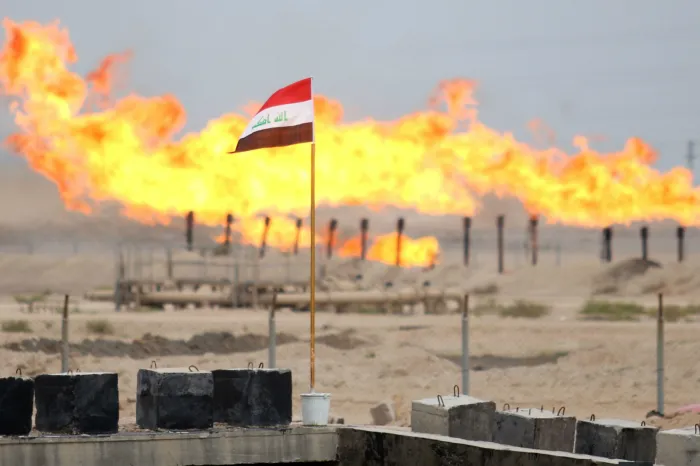
Middle Eastern oil producers are poised for a significant increase in crude oil output in 2027, following a sharp decline caused by regional conflicts and supply disruptions. Iraq, the second-largest OPEC oil producer, is expected to lead this recovery with a projected production surge of 34.1%. The United Arab Emirates, no longer restricted by OPEC membership, plans to boost its output by 33%, while Kuwait, Bahrain, and Saudi Arabia anticipate increases of 26.3%, 15.7%, and 14.5%, respectively.
The production cutbacks stemmed largely from the ongoing conflict involving Iran and the closure of the Strait of Hormuz, a critical chokepoint responsible for about 20% of global oil and liquefied natural gas shipments. The disruption caused a near 90% drop in traffic through the strait, forcing producers to reduce upstream output as storage facilities reached capacity. These factors led to a global crude production loss exceeding 10 million barrels per day, with cumulative supply shortfalls nearing one billion barrels by late May.
This unprecedented supply disruption pushed OPEC’s collective oil production to its lowest levels in 26 years. While analysts expect a rebound next year once the Strait of Hormuz crisis resolves, restoring production will be gradual as not all wells can be quickly reactivated. Meanwhile, geopolitical tensions continue to influence market dynamics. Iran recently suspended ceasefire talks with the United States due to escalating violence in Lebanon linked to Israeli military actions, causing crude oil prices to spike over 5% in early June.
The market also faces additional pressure from Russia’s decision to ban jet fuel exports after Ukrainian attacks on Russian refineries, leading to a record low in Russian refinery runs since 2009. U.S. and EU sanctions have further constrained Russian oil exports, intensifying global supply challenges.
Despite these hurdles, OPEC has announced plans to gradually raise production quotas throughout the summer months. The cartel aims to fully restore halted output by the end of September. However, ongoing conflict in the Middle East is likely to delay these increases as producers are compelled to cut output amid security concerns.
Global inventories have been declining rapidly, with the International Energy Agency reporting a drop of around four million barrels per day in March and April. This trend has left the oil market severely undersupplied heading into the peak demand season. In the United States, crude stockpiles remain below average levels for this time of year, even as active drilling rigs rise to an eleven-month high.
Overall, while significant production gains are anticipated across Middle Eastern oil exporters next year, current geopolitical tensions and logistical challenges continue to create uncertainty for global energy markets. The balance between restoring output and maintaining regional stability will remain a key factor shaping oil supply trends in the near future.