
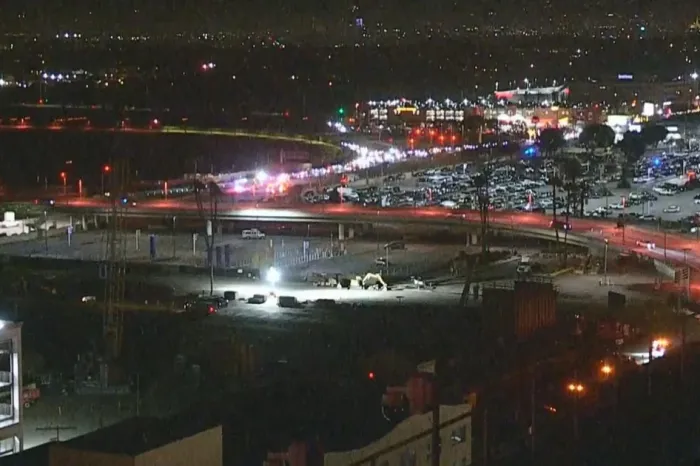
A significant natural gas leak occurred near Los Angeles International Airport (LAX) on Wednesday night, prompting immediate road closures and widespread traffic disruptions. Construction workers accidentally struck a six-inch natural gas pipeline along with an adjacent water main while operating near Sepulveda Boulevard and 96th Street. The Los Angeles Fire Department (LAFD) responded swiftly, coordinating closely with utility companies to contain the situation and ensure public safety.
Emergency Response and Road Closures
Due to the potential danger posed by the gas leak, the Department of Transportation quickly closed the northbound lanes of Sepulveda Boulevard at Imperial Highway, as well as both directions of 96th Street. These closures significantly impacted access routes surrounding LAX, one of the nation’s busiest airports, leading to heavier traffic congestion than usual. Commuters were advised to anticipate delays and consider alternate routes when traveling to or from the airport.
Utility Repairs and Safety Measures
Crews from the Los Angeles Department of Water and Power, together with local gas company technicians, were dispatched immediately to repair the damaged pipeline and water main. Firefighters maintained a constant presence at the scene throughout the repair process to monitor for any signs of further hazards related to the gas leak. Despite ongoing efforts, officials did not provide a precise timeline for completing repairs or reopening the affected roads during Wednesday evening.
Risks and Precautions in Urban Construction
This incident underscores the risks associated with construction work in densely populated urban areas where underground utilities are closely situated. Natural gas leaks carry serious safety risks including fire hazards and potential health effects from exposure. Emergency responders acted decisively to secure the area, prevent escalation, and protect residents and travelers in the vicinity.
Authorities urged residents and commuters near LAX to stay updated through official channels and exercise caution when navigating near the affected zones. While acknowledging the inconvenience caused by road closures, officials emphasized that these steps were essential for safely addressing the leak. The rapid collaboration between fire services, transportation officials, and utility crews demonstrated effective crisis management amid an unexpected infrastructure emergency.
Ongoing Monitoring and Infrastructure Challenges
As repair work continues, officials remain vigilant in monitoring air quality and structural safety around the site. This event highlights ongoing challenges faced by major metropolitan regions in maintaining critical infrastructure. It also reinforces the importance of thorough oversight during construction projects involving essential utilities such as natural gas pipelines to prevent similar incidents in the future.