

Gasoline prices around the world are experiencing varied movements, affecting consumers and economies differently amid ongoing geopolitical tensions and inflation concerns. In Taiwan, state-owned CPC Corporation has decided to keep domestic gasoline and diesel prices steady for the 11th consecutive week. Despite international crude oil prices being approximately 30 percent higher than before the conflict between the United States, Israel, and Iran began in February, CPC’s decision aims to ease inflation pressures on consumers and businesses. The recommended retail prices remain at NT$32.4, NT$33.9, and NT$35.9 per liter for different grades of unleaded gasoline, while diesel stays at NT$31.0 per liter through June 21. This price freeze means CPC is absorbing losses on diesel sales but not gasoline.
Meanwhile, South Korea has seen a slight decline in gasoline and diesel prices for the fourth consecutive week. Data from Korea Petroleum Industries Corporation shows a minor drop in national average gasoline prices to about 2,009.9 Korean won per liter. Diesel prices also fell slightly to 2,004.8 Korean won per liter. These decreases follow fluctuations in international oil prices influenced by tensions between the U.S. and Iran and later eased by talks of a possible peace agreement. However, domestic gas prices generally reflect international price changes with a two- to three-week delay.
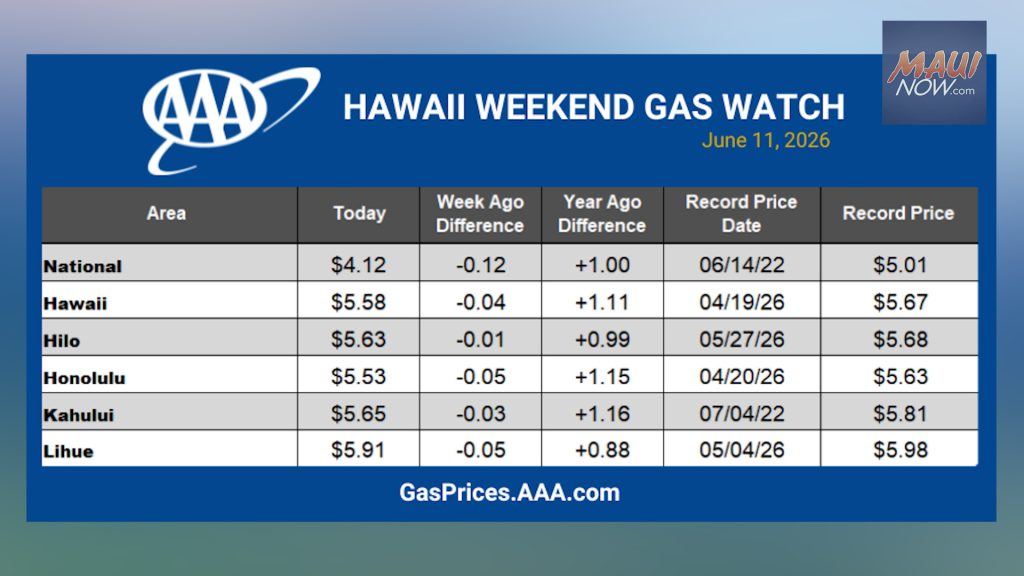
In the United States, high gasoline prices have contributed significantly to inflation concerns, though recent declines have provided some relief. According to AAA Hawaiʻi, gas prices have dropped slightly but remain substantially higher than a year ago due to global crude oil volatility and increased summer travel demand. Hawaii’s average price is currently $5.58 per gallon, second highest in the nation after California. Nationally, the average price for regular gasoline has fallen to $4.12 per gallon after three weeks of decline.
These trends have affected consumer sentiment in the U.S., which saw a modest rebound in early June after four months of decline. The University of Michigan’s consumer sentiment index rose to 48.9 from May’s record low of 44.8, driven largely by easing gasoline prices. While still low by historical standards, this increase signals some relief for households facing high fuel costs amid persistent inflation and economic uncertainty linked to geopolitical conflicts.
Overall inflation remains elevated with energy costs being a major driver. For instance, New York’s local inflation rate exceeds the national average partly due to surging fuel expenses. Rising gasoline prices have forced many consumers, especially those in lower-income brackets, to cut spending on other essentials. Energy price volatility continues alongside increases in other commodity costs such as beef and coffee, further straining household budgets.
Experts note that if geopolitical tensions ease and oil prices continue their downward trend, inflationary pressures may moderate further, helping stabilize consumer spending and economic confidence. However, uncertainties remain as global markets react to ongoing conflicts and seasonal travel demands.
In summary, while some regions are experiencing stable or falling gasoline prices, others face persistently high costs that impact inflation and consumer behavior worldwide. The interplay of international events and local policies will continue shaping fuel price trends and their effects on households globally.