
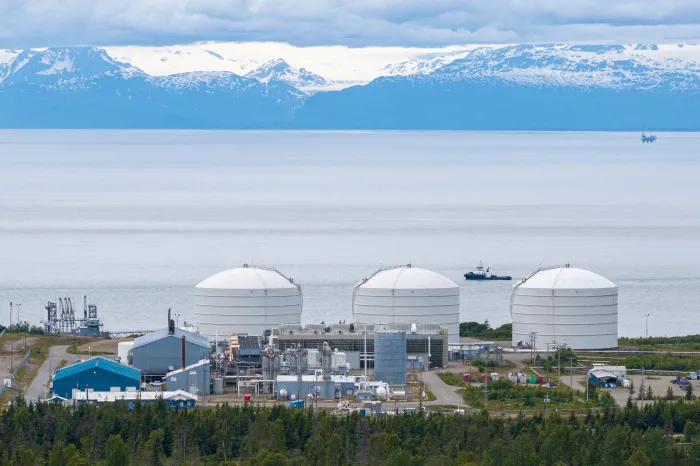
The Alaska House of Representatives is poised to approve a significant tax reduction aimed at encouraging the construction of a major natural gas pipeline. The proposal, which could cut state taxes on the project by approximately 85% for 30 years, is seen as a crucial step to make the Alaska LNG project economically viable in competitive global markets. This move comes amid ongoing debates about how best to develop Alaska’s vast natural gas resources and support the state’s energy future.
The bill advanced unanimously through the House Finance Committee, reflecting strong bipartisan support among lawmakers. It proposes replacing the current property tax with a lower tax based on the volume of gas transported through the pipeline and processed at associated facilities. The proposed tax structure would exempt the project from taxes during construction and offer a five-year tax holiday after gas flow begins. Following this period, Glenfarne Alaska, the project’s developer, would pay modest fees per thousand cubic feet of gas handled.
The Alaska LNG project is an ambitious $54 billion plan that includes an 807-mile pipeline stretching from the North Slope to a port on the Kenai Peninsula. The project also involves two major industrial plants: one for removing carbon dioxide from the natural gas to protect infrastructure and reduce emissions, and another for liquefying the gas for export. These steps are critical for preparing Alaska’s natural gas for shipment to international markets, especially in Asia.
While the tax cut proposal has garnered support in the House, its fate remains uncertain in the Senate, where some lawmakers have expressed concerns about risks to state finances and consumers. The legislature is currently in a special session with a tight timeline to pass the bill before mid-June. If approved, it would represent a major policy shift designed to attract investment and financing necessary for this large-scale infrastructure project.
Project developers emphasize that without such tax incentives, there is little chance of moving forward with construction. They argue that global competition and high costs make it essential to reduce financial burdens on the project. Glenfarne has also committed to capping natural gas prices for Alaskan consumers to shield them from potential cost overruns, a measure welcomed by some lawmakers and utility officials.
Despite these efforts, experts caution that even with tax breaks, completing the pipeline will be challenging due to high costs and market uncertainties. The project’s success depends on controlling expenses and securing buyers willing to pay forecasted prices for Alaska’s natural gas exports. Nonetheless, many in Alaska view this as an opportunity to unlock long-awaited economic benefits and enhance energy security within the state.
Meanwhile, natural gas production continues expanding in other U.S. regions like Louisiana’s Haynesville Shale, where new exploration activities are boosting local economies despite rising drilling costs. This regional growth contrasts with Alaska’s complex efforts but underscores increasing national interest in natural gas as an energy source.
As Alaska lawmakers weigh this pivotal tax proposal, its outcome will shape not only the state’s energy landscape but also its role in global natural gas markets over the coming decades.