
Texas has experienced a surge in incidents involving damage to underground natural gas pipelines, with over 4,800 reported cases since the start of 2026. These damages often lead to dangerous gas leaks, posing significant risks to public safety and property. In Dallas, Tarrant, Collin, and Denton counties alone, more than 1,000 such incidents have occurred this year. Authorities are investigating a recent deadly explosion at an Oak Cliff apartment complex that killed three people, which preliminary reports suggest was caused by damage to a natural gas line.
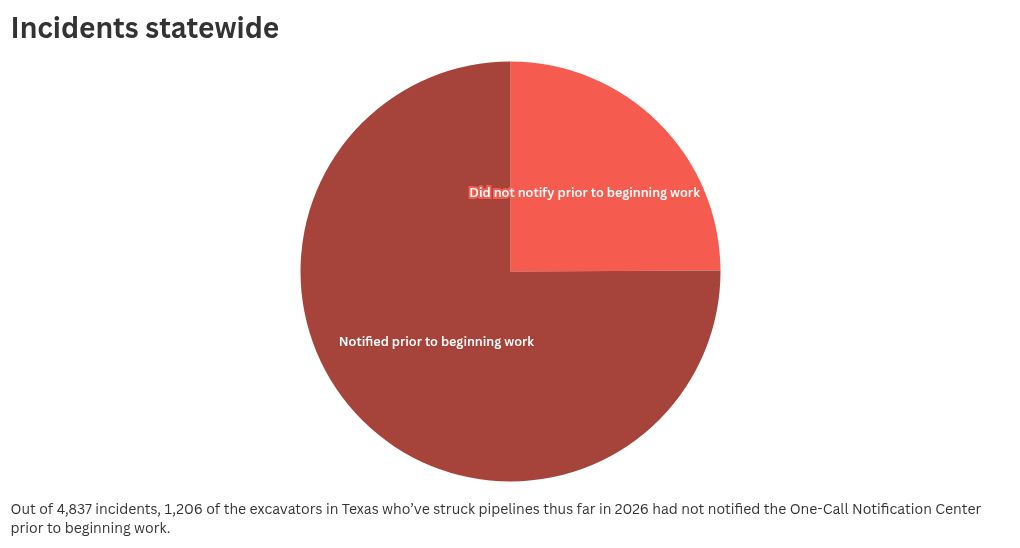
The Texas Railroad Commission data reveals that many excavators failed to notify the state’s One-Call Notification Center before digging, a legal requirement designed to prevent such accidents. This notification center arranges for underground utility lines to be marked free of charge. Despite the law mandating notification at least 48 hours prior to excavation, about one-third of pipeline strikes statewide involved excavators who did not make these calls.
Experts point out that locating underground pipelines is challenging due to outdated or incomplete records, especially for non-metallic pipes. Salvatore Salamone, an engineering professor at the University of Texas, advocates for advanced non-destructive technologies and remote sensors to better map pipelines and reduce accidental strikes. However, these technologies are not always practical on every construction site.
At the federal level, the Federal Energy Regulatory Commission (FERC) oversees the approval and regulation of interstate natural gas pipeline projects. FERC coordinates with multiple agencies responsible for environmental protection, safety standards, and land use. These agencies include the Environmental Protection Agency (EPA), Department of Transportation (DOT), Army Corps of Engineers, Fish and Wildlife Service, and various state and local departments. FERC’s process aims to streamline permitting while ensuring comprehensive environmental and safety reviews.
Community engagement is increasingly emphasized in pipeline projects. For example, the Maysville Project in Kentucky has seen extensive outreach efforts with landowners and residents to address concerns and incorporate feedback into project design. Safety remains a top priority as these projects must meet stringent federal standards before receiving approval.
The consequences of pipeline damage extend beyond Texas. Past incidents across the United States have resulted in fatalities, injuries, and extensive property damage. Notable cases include explosions in Dallas in 2018 and Missouri in 2025 linked to excavation errors near natural gas lines. These tragedies have prompted calls for enhanced oversight, improved technology adoption, and stricter enforcement of existing laws.
Industry leaders and regulators continue working toward reducing excavation-related damages by improving notification systems and promoting best practices among contractors and homeowners. However, persistent challenges remain due to aging infrastructure, incomplete mapping data, and occasional lapses in compliance with safety protocols.
As natural gas remains a key energy source supporting millions of homes and businesses, balancing infrastructure development with public safety is critical. Ongoing regulatory efforts aim to ensure safer pipeline operations while addressing community concerns about environmental impact and reliability.