
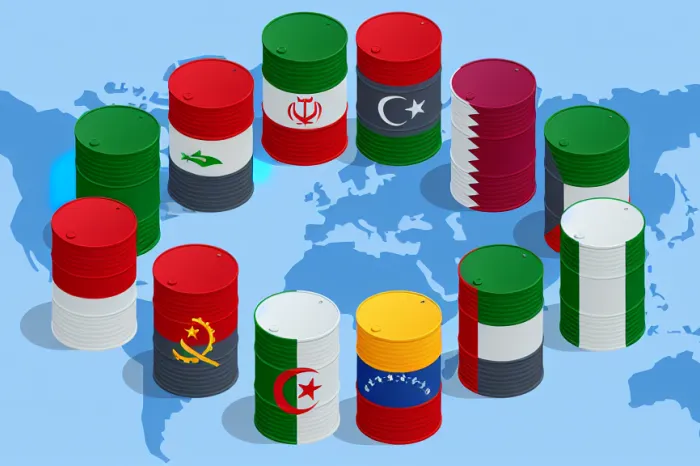
The Organization of the Petroleum Exporting Countries (OPEC) has long been a key player in managing global oil markets, primarily through its ability to adjust production levels to influence prices and maintain market stability. However, recent geopolitical moves, particularly by the United States under President Donald Trump, alongside escalating conflicts in the Middle East, have significantly diminished OPEC’s control and reshaped the energy landscape.
Traditionally led by Saudi Arabia, OPEC’s share of global oil production has declined steadily from about 50% in the 1970s to approximately 35% last year. This figure dropped even further to around 26% following disruptions caused by the closure of the Strait of Hormuz amid conflict with Iran. The recent departure of the United Arab Emirates (UAE), OPEC’s fourth-largest producer, after six decades, marks a direct challenge to the group’s authority. The UAE chose to pursue an independent energy policy free from OPEC production quotas, a move welcomed by President Trump who has been a vocal critic of OPEC for years.
President Trump’s administration took aggressive steps that weakened OPEC’s influence more than expected. The U.S.-backed change in Venezuela’s leadership allowed Washington to control its oil sector and redirect exports to American markets. Venezuela, once a founding OPEC member with dwindling production due to sanctions and mismanagement, is now poised for recovery with new investments. Yet Caracas is unlikely to adhere to OPEC output limits given U.S. oversight.
More significantly, U.S. and Israeli strikes against Iran led to the closure of the Strait of Hormuz, a critical passageway for nearly 20% of the world’s oil and gas supplies. This action forced Gulf producers like Saudi Arabia and the UAE to shut down large parts of their output or divert exports through alternate routes. OPEC’s main members found themselves unable to manage this major supply shock effectively. Meanwhile, the U.S., now the world’s largest oil producer, increased its exports to Asia and Europe, further eroding OPEC’s market share.
While this shift strengthens America’s position in global energy markets, it also creates challenges. Unlike OPEC, U.S. producers operate under market forces without spare capacity reserved for balancing disruptions. Without OPEC’s traditional role as a market stabilizer—especially its ability to cut or increase output quickly—oil markets face greater volatility and fewer buffers against future crises.
OPEC has historically helped cushion shocks from wars and natural disasters by using its spare capacity. For example, during the COVID-19 pandemic onset, OPEC+ led by Saudi Arabia agreed on historic production cuts that helped stabilize prices. Without such coordinated efforts in place now, energy prices could become more unstable, leading to unpredictable booms and busts that affect producers and consumers worldwide.
Although some analysts argue it is too early to declare OPEC dead, recent events reveal a fractured cartel struggling with internal divisions. Iran’s attacks on fellow members’ infrastructure and its blockade of Hormuz have deepened rifts that may take years to heal—if ever. The absence of the UAE from recent OPEC+ meetings underscores this fragmentation.
In conclusion, while President Trump’s policies have weakened OPEC’s grip on global oil markets—a development he hailed as positive—the long-term consequences may prove complicated. Reduced market management by OPEC could lead to higher price volatility and instability that ultimately affect all major players, including the U.S., consumers, and oil-producing nations worldwide.