
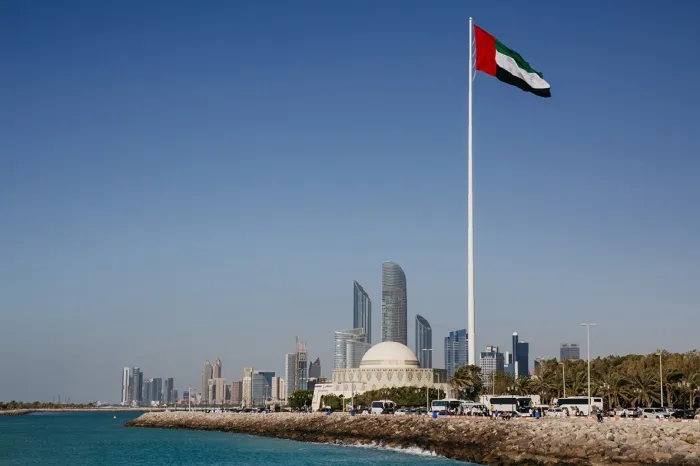
The United Arab Emirates recently made a sovereign decision to leave the Organization of the Petroleum Exporting Countries (OPEC), signaling a shift in its energy and economic strategy amid ongoing regional conflicts. Despite the complex geopolitical environment, including a prolonged closure of the Strait of Hormuz due to regional tensions, global oil prices have not surged to expected levels, demonstrating a temporary but fragile market balance.
Energy analysts had anticipated that the closure of the Strait of Hormuz, a critical artery for global oil shipments, would push prices beyond $150 per barrel. However, after three months, oil has remained just over $100 per barrel. This unexpected price stability is largely due to the world’s significant inventory buffers and OPEC members’ spare production capacity, particularly from Saudi Arabia. These factors have delayed more dramatic price increases but have not resolved underlying supply challenges.
Mohammed Ibrahim Al Dhaheri, a senior Emirati diplomat and adviser at the Ministry of Foreign Affairs, emphasized that the UAE’s departure from OPEC was unrelated to recent conflicts, including attacks involving missiles and drones from Iran. Instead, it was a sovereign choice reflecting the UAE’s economic diversification efforts. Over the past two decades, the UAE has transformed its economy so that oil now accounts for only about 25% of its GDP, down from 75% twenty years ago. This diversification has allowed greater freedom in economic policy and market stabilization efforts.
The UAE continues to maintain strong diplomatic ties with multiple global powers, balancing relations with the United States, China, and Russia while pursuing strategic autonomy based on national interests. The country also remains committed to peace and stability in its region through diplomacy and bridge-building between nations. The signing of the Abraham Accords with Israel six years ago remains a cornerstone of its foreign policy, aimed at fostering cooperation and supporting a two-state solution to the Israeli-Palestinian conflict.
The current oil market situation reveals deeper vulnerabilities despite surface-level resilience. Global inventories are declining steadily as they absorb supply shocks from the Strait of Hormuz closure. Spare capacity among OPEC members can help in the short term but is limited and cannot fully replace lost supply indefinitely. Demand adjustments have also played a role in keeping prices from spiking; higher prices have led to reduced consumption in some sectors and regions. However, these demand changes are temporary and could reverse if economic conditions improve.
Looking ahead, if disruptions at the Strait of Hormuz persist, the global oil market may face sharper price increases as inventory buffers shrink and spare capacity diminishes. The current price levels should be seen as a warning rather than reassurance that all risks have passed. Meanwhile, the UAE’s strategic choices reflect its broader goal of maintaining economic stability and advancing technology-driven growth sectors like artificial intelligence and renewable energy.
The UAE’s exit from OPEC marks an important moment in regional political dynamics and energy policy. It underscores how member states are adapting their roles within global oil markets while navigating complex geopolitical challenges. As tensions continue in the Middle East, both energy markets and regional diplomacy will remain closely intertwined with evolving strategies by key players like the UAE.