
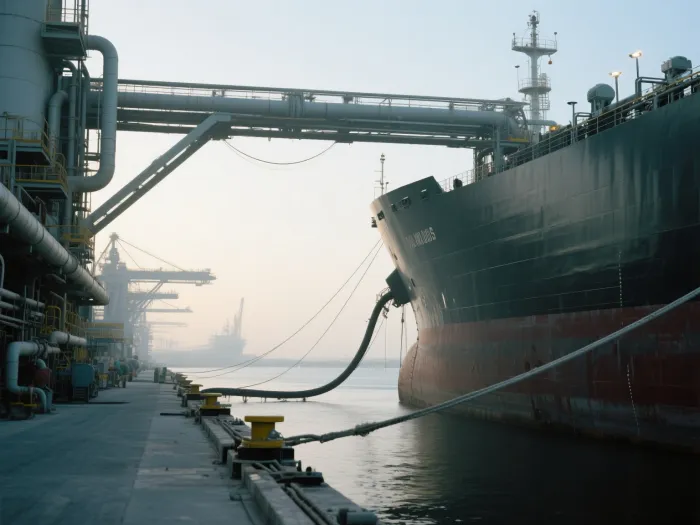
Serbia’s primary oil company, NIS (Serbian Oil Industry), which is mainly owned by Russian interests, announced on Tuesday that its Pancevo refinery is suspending production. The decision comes as a direct consequence of US sanctions imposed in response to Russia’s full-scale invasion of Ukraine. These sanctions have resulted in a shortage of crude oil, making it impossible for the refinery to maintain normal operations. NIS stated, “Pancevo Oil Refinery has started suspending the operation of its production units today.” The company emphasized that it remains committed to supplying the domestic market with petroleum products, drawing from existing stockpiles to ensure there are no immediate interruptions for consumers.
Despite these assurances, the halt in production marks a significant moment for Serbia’s energy sector. The Pancevo refinery, with a maximum annual capacity of 4.8 million tonnes, produces motor fuels compliant with Euro-5 standards, as well as aviation fuel, liquified petroleum gas, petroleum coke, fuel oil, bitumen, propylene, aromatics, straight-run gasoline for pyrolysis, and other petroleum products such as sulphur and hydrocarbons. NIS expressed hope that regular operations would resume as soon as possible but admitted that the restoration of supply depends on resolving the ongoing sanctions and crude oil shortages.
Government Response and Ownership Challenges
The Serbian government has acknowledged its inability to secure a US operating license for the Russian-owned refinery. Earlier on Tuesday, Serbian President Aleksandar Vucic confirmed that he had not received any positive decision from the United States regarding NIS’s ability to import oil or continue operations. He explained at a press conference that Serbia’s Minister of Mining would formally inform NIS about the lack of progress with the Americans on licensing matters. As a result, according to Vucic, the cessation of refinery operations was inevitable—though the exact timing would be determined by NIS.
President Vucic has promised that a resolution will be found by January 15. He previously gave Russian companies Gazprom and Gazprom Neft—partial owners of NIS—a deadline until January 15 to find a buyer for their holdings in the oil company. Nationalisation remains an option if no buyer is found within this timeframe; however, Vucic assured that nationalisation would not occur immediately even if negotiations fail. The uncertainty surrounding ownership and operational licenses has added complexity to Serbia’s energy security situation.
Historical Context and Investment Background
NIS is Serbia’s only oil company and has been under majority Russian ownership since 2008 when Serbia sold 51 percent of its shares to Gazprom for €400 million—a deal critics described as undervalued—alongside an additional €550 million investment pledge. Since 2009, NIS claims to have invested over €900 million in modernizing its facilities and expanding its production capabilities.
Ownership structures have shifted over time. In January 2025, when US sanctions were first announced against NIS, Russia’s Gazprom held 6.15 percent of the company and Gazprom Neft owned another 50 percent. Serbia maintained just under 30 percent ownership while minority shareholders controlled slightly less than 14 percent. By February, Gazprom had increased its stake to 11.3 percent while Gazprom Neft decreased its share to 44.9 percent. In September, Russian-owned JSC Intelligence assumed control of an 11.3 percent stake in Gazprom.
Impact on Serbia’s Energy Security
The imposition of US sanctions on NIS became effective in October after initial waivers expired. These measures have forced Serbia into a difficult position as winter approaches and energy demands rise. The government hopes that a swift sell-off by Russian shareholders will allow continued fuel supplies and prevent long-term disruptions in domestic energy provision.
For now, NIS assures customers that fuel stocks are sufficient to meet immediate needs. However, the future operation of the Pancevo refinery—and by extension Serbia’s broader energy sector—depends heavily on diplomatic developments and potential changes in ownership structure before January 15. As nationalisation remains only a last resort and international negotiations continue, both government officials and industry leaders are working urgently toward a solution that can safeguard Serbia’s energy stability during this critical period.