
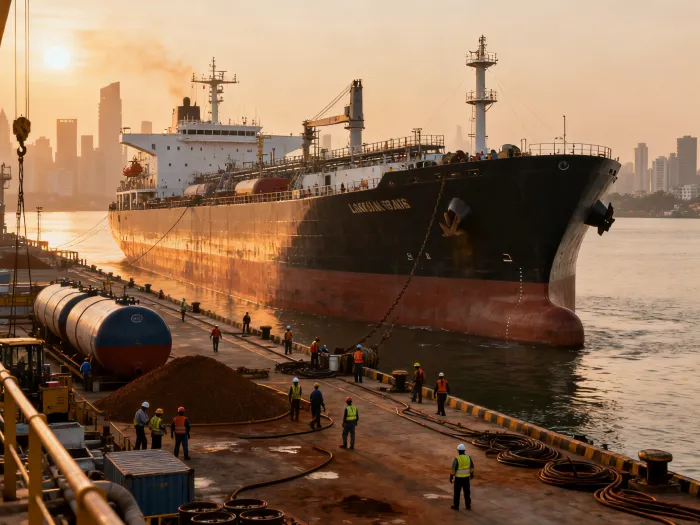
India stands as the world’s third-largest consumer of crude oil, trailing only the United States and China. In 2025, its consumption reached 265.7 million metric tonnes, increasing at a rate of 3.7 percent annually. With limited domestic oil production, India is heavily reliant on foreign imports, sourcing nearly 89 percent of its crude oil from international suppliers. Before the onset of the Russia–Ukraine conflict in 2022, Russian oil contributed just 2.5 percent to India’s total imports.
As Western sanctions sought to isolate Russia economically, Moscow responded by offering discounted oil to Asian markets, including India. These discounts enabled Indian refiners to save around $12.2 per barrel, which led to a dramatic increase in purchases from Russia. By the fiscal year 2022–23, Russian crude accounted for 21.6 percent of India’s imports; this share climbed to over 35 percent in the following years. The attractive pricing prompted a significant shift in India’s import patterns, making Russia one of its key energy partners.
U.S. Sanctions and Tariffs: Immediate Effects on Indian Energy Trade
The growing reliance on Russian oil set the stage for new actions from the United States. On August 27, 2025, Washington imposed a 25 percent duty on Indian purchases of Russian crude, adding to reciprocal tariffs already in place. Further tightening came on October 22, when sanctions were announced against major Russian energy companies Rosneft and Lukoil and their subsidiaries, effective November 21.
These measures reflect President Trump’s commitment to reduce Russia’s revenue streams and pressure its energy sector amid ongoing geopolitical tensions. Since Rosneft and Lukoil together supplied about 60 percent of India’s Russian oil imports, Indian refiners were forced to reconsider their purchasing strategies and seek alternative sources.
The U.S. also encouraged greater bilateral trade with India under “Mission 500,” aiming for $500 billion in trade by 2030. As a result, India increased its oil imports from the United States from about 3 percent in 2024 to over 10 percent by October 2025. This uptick in U.S. oil imports was partly due to orders placed after the August tariffs were introduced and reflects both economic necessity and diplomatic recalibration.
Market Reactions: Rising Costs and Realignment of Import Sources
The imposition of U.S. sanctions triggered an immediate response in global energy markets. Brent crude prices rose by eight percent, driving up India’s annual oil import costs by an estimated $6–7 billion. Indian refineries faced rising operational expenses as access to discounted Russian oil was curtailed.
Leading importers like Reliance Industries cut orders from sanctioned Russian suppliers by 13 percent in October, while sharply increasing purchases from Saudi Arabia and Iraq. The combined share of these two countries in India’s oil imports grew from 26 percent in September to 40 percent in October 2025. State-run refineries such as Mangalore Refinery & Petrochemicals Ltd., and HPCL-Mittal Energy Ltd., also announced intentions to cease importing Russian crude altogether.
In anticipation of the November sanctions deadline, some Indian refiners accelerated purchases of Russian oil to avoid future restrictions. Nayara Energy—whose second-largest refinery is partially owned by Rosneft—plans to continue importing from sanctioned entities due to existing ownership ties. Other companies are exploring options for sourcing through unsanctioned intermediaries or diversifying their supply chains.
Strategic Implications: Diplomacy, Diversification, and Energy Security
The ripple effects of U.S. sanctions extend beyond immediate market shifts into broader strategic considerations for India’s energy security and foreign policy direction.
Western Scrutiny: The European Union and United Kingdom joined the United States in sanctioning Russian energy firms, signaling a coordinated transatlantic approach toward Russia policy in 2025. This increased scrutiny may affect India’s exports of petroleum products to Europe; new EU guidelines banning refined products derived from Russian crude are set to take effect in January 2026.
India’s Balancing Act: Despite surging U.S. imports driven by diplomatic goals—such as meeting “Mission 500” targets and avoiding secondary sanctions—India cannot easily reduce its dependence on Russian supplies. Sanctions impact only half of Russia’s total output; unsanctioned Russian crude remains accessible to Indian refiners. Additionally, Russia supplies “medium-sour crude,” which is well suited for India’s refining infrastructure.
Import Diversification: Indian authorities have stressed that alternative sources are available globally should any supply stream be disrupted. The government has encouraged diversification toward countries like Iraq, the UAE, Brazil, Argentina, Colombia, Guyana, Nigeria, Ghana, Togo, and Senegal.
Navigating Geopolitical Shifts While Securing Energy Needs
India is adopting an economy-first approach as it responds to shifting global dynamics and external pressure from U.S.-led sanctions regimes. While a complete withdrawal from Russian oil is not considered practical at present, gradual diversification allows New Delhi to preserve its strategic autonomy.
In the short term, reductions in Russian imports may facilitate further trade negotiations with Washington while helping India maintain balanced relations with both Western partners and Russia. Over time, continued adaptation will be essential for ensuring national energy security amid evolving geopolitical challenges.