
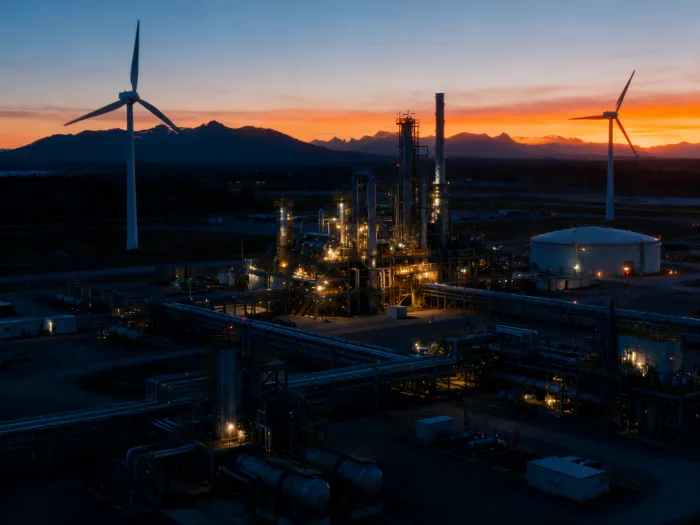
The Canadian oil and gas industry is confronting unprecedented financial challenges as the global shift towards clean energy accelerates. According to two new reports released by financial think tank Carbon Tracker—Fading Fortunes and Petro-Provinces at Risk—the sector’s value and the fiscal health of provincial governments are increasingly exposed to the risks of declining long-term demand for fossil fuels. These findings come at a pivotal time, as Canada’s 2025 federal budget highlights the tension within the nation’s energy strategy. The budget continues to incentivize projects related to liquified natural gas (LNG) and carbon capture, utilization, and storage (CCUS), while also expanding support for clean energy initiatives and critical minerals. Although there is no direct encouragement for new upstream oil and gas production, ongoing speculation about new pipeline construction reflects the complex landscape facing Canadian energy stakeholders.
The reports emphasize that Canada must reconcile its legacy as a major oil and gas producer with the realities of a changing global market. As more countries commit to net-zero targets, demand for fossil fuels is projected to weaken, raising questions about the sustainability of current investment strategies. The threat to investor returns and provincial revenues is not only immediate but also structural, indicating that the sector’s traditional strengths may no longer guarantee future prosperity.
Corporate Risk: Investment in New Projects May Erode Long-Term Value
Carbon Tracker’s Fading Fortunes report offers a detailed analysis of how new investments could diminish the value of Canadian oil and gas companies. By benchmarking Canadian firms against their global peers, the report provides context for the sector’s risk exposure on an international scale. The analysis shows that investments in new projects, particularly those at the exploration stage, pose significant risks in scenarios where oil prices fall dramatically. For instance, if prices drop to $30 per barrel—a level aligned with ambitious climate goals—approximately 30% of the sector’s total value could be at risk if companies continue with business-as-usual investment patterns.
Even under less aggressive transition scenarios where prices remain higher, such as $70 per barrel, new exploration projects offer minimal upside. New natural gas developments, long considered a strategic pillar for Canada, are also vulnerable; moderate-paced transitions with gas prices at $50 per barrel could erode value instead of enhancing it. Compared to other global oil producers, Canadian companies appear more exposed to these risks due to higher costs and less competitive project economics.
A cautious approach—reducing new project approvals—could improve the sector’s standing relative to integrated oil companies (IOCs) and national oil companies (NOCs). However, even with reduced exposure, downside risks are expected to surpass potential gains. Olivia Bisel, lead author of Fading Fortunes, notes that continued expansion represents a high-risk, low-reward strategy. She urges investors and policymakers to reconsider capital allocation decisions and public policy frameworks in light of deteriorating long-term risk profiles.
Provincial Government Revenues Under Pressure
The Petro-Provinces at Risk report focuses on how falling oil and gas demand could severely impact provincial budgets. Carbon Tracker forecasts that Canadian provinces could see their upstream oil and gas revenues shrink by more than 80% during the 2030s if global trends continue. This reduction would place significant pressure on public finances, especially in regions heavily dependent on resource royalties and taxes.
Rich Collett-White, lead author of the report, warns that provinces must prepare for lower demand by diversifying their economies. The rise of clean energy technologies and widespread electrification threaten to undermine future tax revenues from fossil fuel production. High-cost Canadian projects may struggle to compete globally against lower-cost producers, further amplifying fiscal vulnerabilities.
Technology favored by industry may help reduce operational emissions but is unlikely to fully protect against declining demand or prices due to high costs and slow deployment rates. Additionally, both governments and companies face increasing decommissioning liabilities as aging infrastructure requires cleanup—a burden that could further strain public budgets if not addressed proactively.
To mitigate these risks, Carbon Tracker recommends that provinces invest in sectors resilient to transition pressures, such as clean energy and critical minerals. Diversification would help build a more stable fiscal base and offset expected shortfalls in upstream tax revenues.
Implications for Investors, Regulators, and Policymakers
The findings from Carbon Tracker carry important implications for financial institutions, regulators, provincial governments, and policymakers. Financial institutions are advised to strengthen valuation models by factoring in transition risks and engaging companies about the viability of new upstream investments—especially those focused on exploration. Enhanced stress testing against lower long-term commodity price scenarios can help reveal vulnerabilities within portfolios exposed to fossil fuel assets.
Regulators are encouraged to require clearer disclosures regarding cash flow risks associated with oil and gas operations. Stress testing financial systems against possible price declines will help ensure resilience amid changing market dynamics. Policymakers should consider phasing out public financing and tax support for new fossil fuel projects while prioritizing diversification efforts into clean industries.
Building up fiscal reserves during periods when oil and gas revenues remain strong is essential for preparing for future downturns. Robust decommissioning plans are needed to prevent taxpayers from bearing future cleanup costs associated with aging infrastructure.
In summary, Canada’s oil and gas sector faces significant revenue risk as global energy markets transition toward cleaner alternatives. The country’s policymakers must weigh short-term incentives against long-term sustainability challenges while developing strategies that safeguard both investor interests and public finances.