
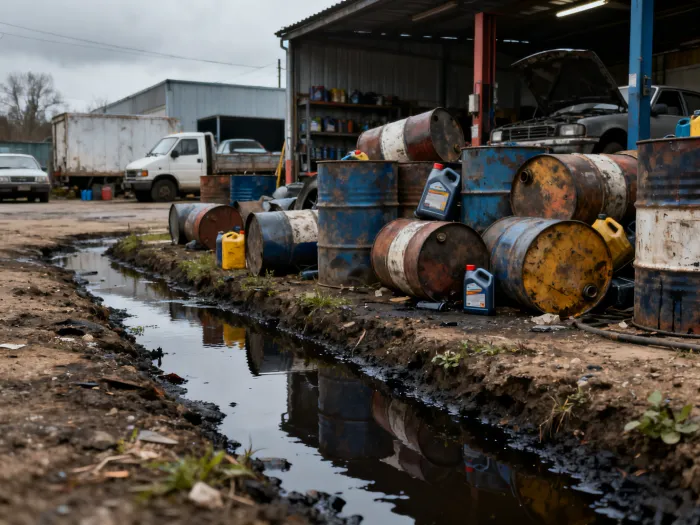
Waste motor oil is classified as hazardous due to its potential to contaminate soil, water, and air. In Serbia, despite clear regulations for managing this dangerous material, tens of thousands of tons remain unaccounted for annually. Auto repair shops, required by law to dispose of waste oil responsibly, often sell it to private individuals who use it for heating their homes. This practice poses serious risks. According to Dejan Lekić from the National Ecological Association, burning used motor oil releases substances similar to chemical warfare agents into the air. Just one liter of waste motor oil can pollute up to one million liters of drinking water, making it one of the most harmful pollutants in the environment.
The United Association of Auto Repair Shops (UAS) recently participated in a public debate regarding Serbia’s draft Law on Waste Management. UAS stressed that the country does not need superficial changes to existing laws but rather practical solutions to prevent Serbia from being overwhelmed by hazardous and non-hazardous waste. The association warned that without effective action, Serbia risks a silent ecological catastrophe that could last for decades.
Alarming Statistics: Most Waste Oil Ends Up Polluting the Environment
According to the latest report from the Serbian Environmental Protection Agency (SEPA), approximately 40,311 tons of oil were placed on the Serbian market in 2023. Out of this total, only 440 tons of waste motor oil were processed domestically, and another 1,660 tons were exported for treatment abroad. This means that roughly 38,000 tons are likely disposed of improperly—ending up in soil, sewage systems, waterways, or burned in household furnaces.
Dejan Lekić emphasizes that burning waste motor oil is extremely dangerous. He warns that such practices release toxic substances into the air and should never be used as fuel in home stoves or discharged into soil or sewage. The correct approach is to collect waste oil and deliver it to licensed operators. Once collected, waste oil can follow two paths: regeneration or destruction. Ideally, regeneration involves purifying the oil technologically to produce base oil for reuse, supporting a circular economy. From one ton of crude oil, only about 2% can be turned into base oil; however, 65% of collected waste oil can be processed into reusable base oil.
Destruction is another option but should only occur in specialized industrial facilities such as cement plants. These plants have furnaces operating above 1,200 degrees Celsius and advanced filtration systems capable of safely destroying hazardous substances and preventing their release into the atmosphere.
Health Risks: Toxic Emissions from Burning Waste Oil at Home
In Serbia, waste motor oil is often used for heating because it is cheap and easily accessible. However, burning this oil in regular household stoves releases large amounts of carcinogenic gases and heavy metals such as lead, mercury, and cadmium. Regular stoves do not reach temperatures high enough to burn these substances safely; instead, they are released directly into the air.
Incomplete combustion also produces extremely toxic compounds like dioxins and furans—known carcinogens linked to neurological damage, hormonal disorders, and fertility problems. “People who burn this oil are literally releasing chemical warfare agents into their surroundings,” Lekić explained.
The impact on public health is profound. Serbia ranks among the top European countries in premature deaths caused by air pollution and holds first place in Europe for lung cancer mortality linked to pollution, according to the World Health Organization. The United Association of Auto Repair Shops describes this ongoing situation as a “silent ecological catastrophe,” warning that current systems are unable to stop it without significant reforms.
Calls for Action: Legal Reform and Adoption of Best Practices
During recent discussions about updating Serbia’s Law on Waste Management, many proposals from UAS aimed at improving waste oil management were rejected by government authorities. UAS argued that its recommendations were based on best practices from both the European Union and neighboring countries—strategies proven effective at reducing hazardous waste elsewhere.
Experts agree that immediate action is required. The solutions involve not just stricter enforcement but also public education about the dangers posed by improper disposal and burning of waste motor oil. Better collection systems and incentives for handing over used oil to licensed operators could help address this issue.
In conclusion, Serbia faces a severe environmental and public health crisis due to tens of thousands of tons of waste motor oil being mismanaged each year. Without urgent intervention and adoption of proven strategies from other nations, the risks will continue to escalate—threatening both people’s health and the integrity of Serbia’s natural environment.