
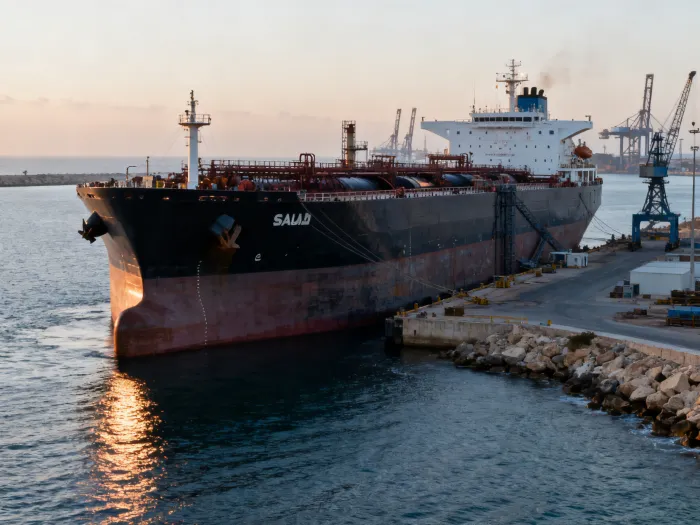
A Saudi Arabian oil tanker carrying 650,000 barrels of crude oil docked at Syria’s Baniyas port in Tartous governorate, according to Syrian state media reports on Monday. This delivery is notable for its size and origin, marking a significant moment in Syrian energy logistics. Alikhbariah TV, the state-run broadcaster, described the shipment as “the first of its kind, provided as support to the Syrian government.”
The arrival of the Saudi tanker signals a new chapter in Syria’s efforts to secure reliable energy resources after years of fluctuating supply and political turmoil. The shipment comes at a critical time for the country, which has been grappling with severe shortages and declining domestic production.
Plans for New Oil Refinery to Revitalize Syrian Energy Sector
Coinciding with the tanker’s arrival, Syrian authorities announced plans for a new oil refinery project. According to Alikhbariah TV, the government intends to build a modern refinery near Homs, aiming to replace the aging facility that has long been central to the country’s energy infrastructure. The proposed refinery will have a daily processing capacity of 150,000 barrels of oil.
The existing refinery is situated roughly seven kilometers west of Homs city. The new construction site is approximately 50 kilometers east of Homs, indicating a strategic shift in infrastructure placement. Officials hope that this project will help stabilize Syria’s energy supply and support economic recovery after years of conflict and disruption.
Historical Context: Declining Oil Production and Economic Impact
Syria was once a major oil producer in the region. In 2010, oil contributed about 20% to the nation’s gross domestic product (GDP), accounted for half of its exports, and made up more than half of all state revenues. At that time, Syria produced around 390,000 barrels of oil per day.
However, the civil unrest that began in 2011 led to dramatic declines in output. By 2023, production had fallen sharply to just 40,000 barrels per day. This drop severely impacted Syria’s ability to generate electricity and maintain economic stability.
Shifting Alliances and Energy Dependence Post-Uprising
During the uprising against Syria’s former regime from 2011 through 2024, the country relied heavily on Iran for oil supplies used primarily for electricity generation. This reliance became more pronounced as domestic production dwindled and international sanctions limited other sources.
After President Bashar al-Assad was ousted in December last year, Iran halted its oil exports to Syria. This cut-off intensified the energy crisis and forced Syrian officials to seek alternative partners. The recent Saudi shipment could represent a new phase in regional energy cooperation and may help mitigate some of the challenges facing Syria’s battered infrastructure.
