
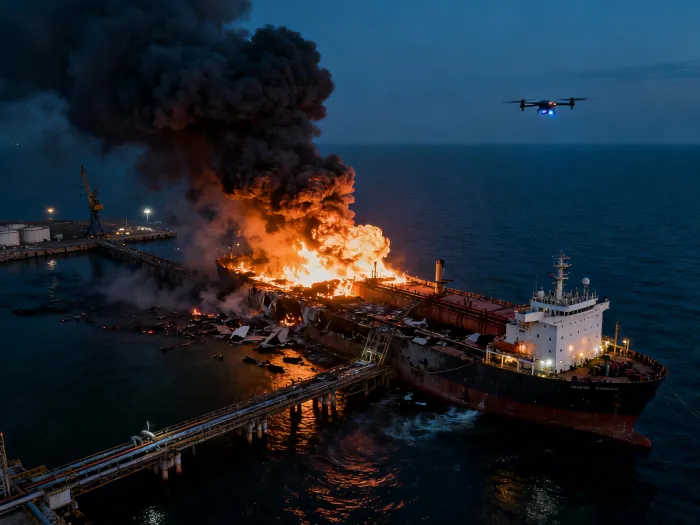
On November 1, Ukrainian drones launched a targeted strike against the Tuapse oil terminal and an oil tanker in Russia’s Krasnodar Krai, resulting in significant damage to critical port infrastructure. According to sources from the Security Service of Ukraine (SBU), five distinct drone strikes were recorded during the incident. The attack caused a fire aboard a tanker and rendered at least four piers used for loading and unloading tankers inoperable. Port buildings also sustained damage, further disrupting operations. Reuters reported that three tankers were docked at the port during the assault, preparing to load naphtha, diesel, and fuel oil. The General Staff of the Ukrainian Armed Forces confirmed on November 2 that the oil infrastructure of the seaport in Tuapse, situated on the Black Sea coast, was damaged.
The Tuapse terminal is operated by Rosneft, Russia’s state oil company. The city is a vital hub for Russian oil exports, with its terminals and infrastructure playing a central role in the country’s energy logistics. Before the attack, the refinery was expected to increase its oil product exports in November. With a processing capacity of 240,000 barrels per day, Tuapse produces naphtha, fuel oil, vacuum gas oil, and high-sulfur diesel—products primarily destined for China, Malaysia, Singapore, and Turkey.
Long-Term Consequences Expected for Russian Energy Sector
Following the drone strike, Tuapse refinery halted its operations on November 2 due to extensive damage to port infrastructure. Ukrainian Navy spokesperson Dmytro Pletenchuk stated during a national telethon that this event would have “long-term consequences” for Russia’s energy sector. He emphasized that beyond immediate disruptions to technological chains involved in shipping, the strike would also lead to increased insurance premiums and discourage many shipping companies from entering these ports. This could create additional obstacles for Russia’s export logistics and potentially reduce future traffic at key facilities like Tuapse.
Social media platforms circulated images and videos showing large fires emanating from the pier area of the terminal off the Black Sea. Russian Telegram channels reported seeing at least three separate fires around the oil terminal zone, including one involving an oil tanker. Officials from Krasnodar Krai’s regional operations headquarters later confirmed that a drone attack had damaged port infrastructure—including vessel deck superstructures, buildings, and terminal facilities. Preliminary reports indicated no casualties from the incident.
Strategic Implications of Continued Ukrainian Strikes
The Security Service of Ukraine (SBU) has publicly stated its intent to continue striking Russian oil refining infrastructure as long as hostilities persist. According to an SBU source quoted by local media: “The SBU continues to strike at Russia’s oil refining infrastructure, which provides resources for aggression against Ukraine. As long as the war continues, flames will continue to burn brightly at Russian oil refineries.” This recent attack is part of a broader campaign by Ukraine to target military and industrial sites within Russia using domestically developed drones.
On November 3, BBC published satellite imagery showing an oil spill stretching approximately 3.6 kilometers from the damaged Tuapse terminal into the Black Sea—a visible consequence of the attack’s severity. The incident occurred amid wider Ukrainian drone strikes across various regions of Russia; explosions and smoke were reported in Oryol city following attacks in Krasnodar Krai.
Notably, this was not the first time Tuapse had been targeted by Ukrainian forces; naval drones previously struck the oil terminal on September 24 according to Ukraine’s military intelligence agency (HUR). Kyiv continues its efforts to weaken Moscow’s primary source of funding for its war against Ukraine by attacking oil and gas production infrastructure.
Broader Impact on Regional Security and Global Energy Markets
The shutdown of Tuapse refinery underscores escalating risks facing Russian energy exports amidst ongoing conflict with Ukraine. The disruption has not only immediate implications for Russian logistics but may also reverberate through global energy markets due to reduced output and increased uncertainty surrounding shipments from Black Sea ports.
Industry analysts note that attacks such as these could force shipping companies to reconsider their routes or implement higher insurance premiums for vessels docking at Russian ports. This in turn may lead to reduced efficiency in Russia’s export operations and affect supply chains extending across Asia and Europe.
As Ukraine continues its campaign of deep strikes using advanced drone technology, both sides face mounting challenges related to security, resource allocation, and strategic planning. The situation remains fluid with further attacks possible—potentially increasing volatility in regional stability and energy markets worldwide.
Related topics: